

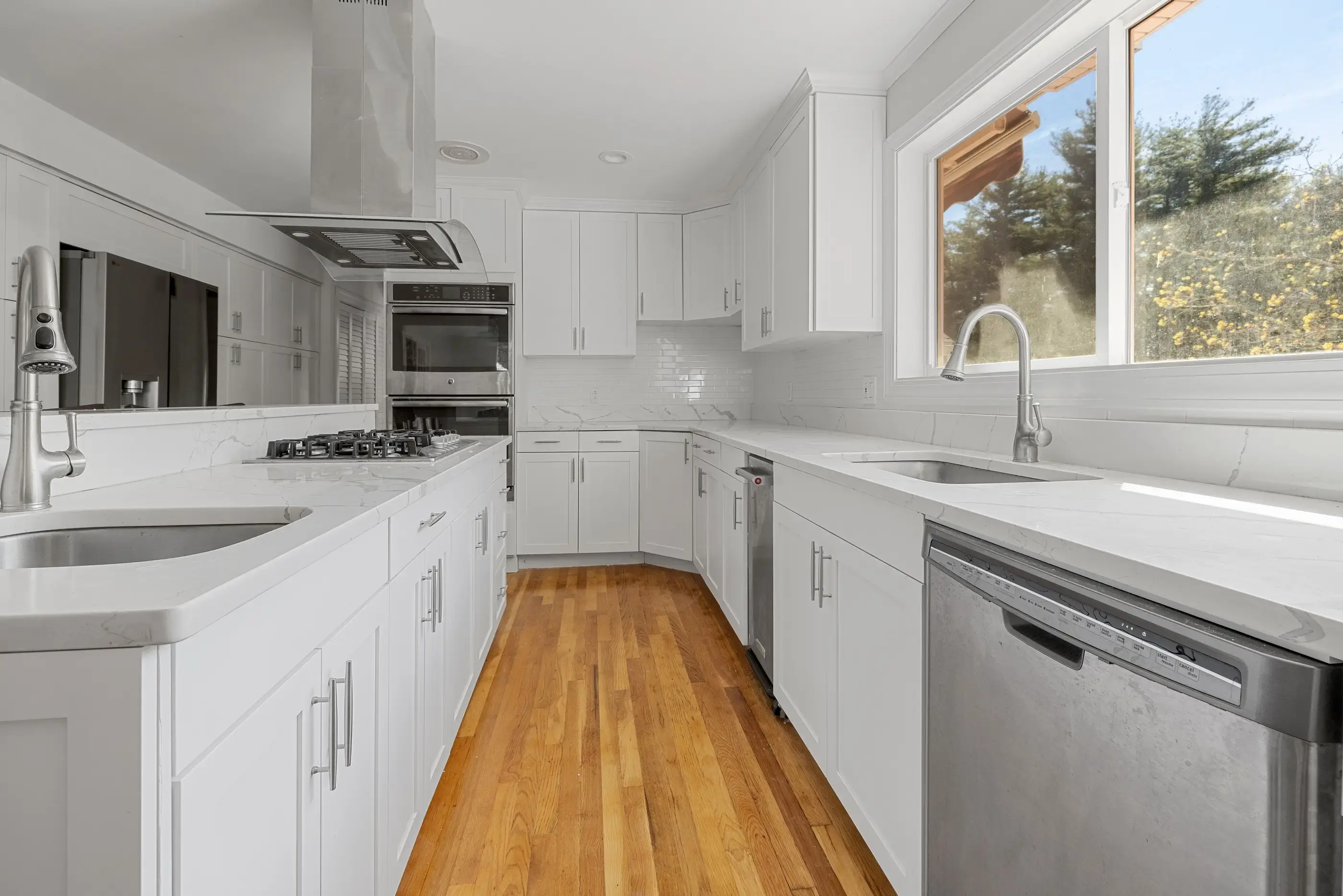
Cabinet door design impacts the overall look of the kitchen, bathroom, or laundry room, so understanding the difference between framed and frameless cabinet doors is crucial as you guide your client through the design and installation process.
This article will walk you through the differences between these two door styles, their pros and cons, and considerations for installation. Showing that you’re knowledgeable about the different types of cabinet construction builds trust with your clients and helps the project run smoothly.
In this article:
- What Are Framed Cabinets?
- What Are Frameless Cabinets?
- Overlay and Inset Door Styles
- Door Installation Requirements for Framed Cabinets
- Door Installation Requirements for Frameless Cabinets
- Pros and Cons of Each Construction Type
- Comparing Framed vs. Frameless Cabinets Side by SIde
- How to Choose Between Framed and Frameless Cabinets for Your Installation Needs
- Frequently Asked Questions
What Are Framed Cabinets?
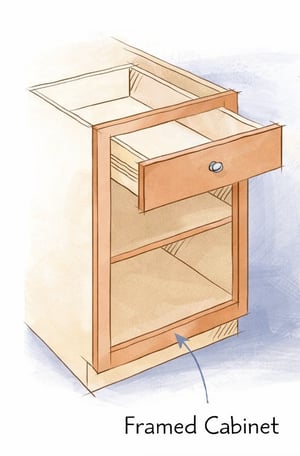
Framed cabinets are popular in the U.S. and consist of a cabinet box with a face frame attached to the front. This traditional cabinet style is easy to install and offers three door installation options — inset, partial overlay, and full overlay.
Basic Construction and Components
Framed cabinet construction means that a face frame is attached to the cabinet box with doors mounted directly to the frame. If a drawer is included, the drawer front will also rest on the frame or inside the face frame for inset cabinets. Face frame cabinets allow for three overlay styles, so clients can choose the one that best fits their kitchen, bathroom, or laundry room design.
Common Materials and Finishes
Cabinet boxes are typically made from plywood or MDF. The face frame and doors can also be plywood or MDF, but they can also be solid wood. The finish depends on the design style and needs, and framed cabinets can be painted or stained.
Typical Applications in Home Design
Framed cabinets are the dominant style in American cabinet design and work best for the following projects:
- Traditional and transitional kitchens
- High-traffic kitchens that need durability
- Budget-conscious remodels
What Are Frameless Cabinets?
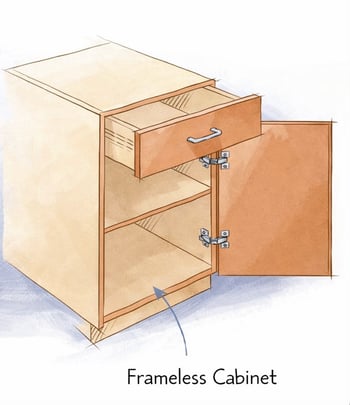
Frameless cabinets, often called European-style cabinets, don’t include a face frame. The doors are installed directly on the cabinet box. While they aren’t typically as stable or easy to install as framed cabinets, they offer more storage and a modern appearance.
Basic Construction and Components
Frameless cabinets consist of the cabinet box and the cabinet door and can include a drawer. Without a face frame, construction and door installation are more difficult, but this style offers full access to the interior. Doors are installed directly on the cabinet box, and the lack of frame means that installation and alignment need to be accurate to avoid binding.
Common Materials and Finishes
Like framed cabinets, frameless cabinet boxes are typically made of plywood or MDF and finished with veneer or laminate. Frameless cabinets also come with similar finish options to framed cabinets and can be painted or stained to fit the design style.
Typical Applications in Home Design
Frameless cabinets are ideal for the following projects:
- Minimalist and modern designs
- Small spaces that need maximum storage and cabinet access
- High-end, custom designs
Overlay and Inset Door Styles
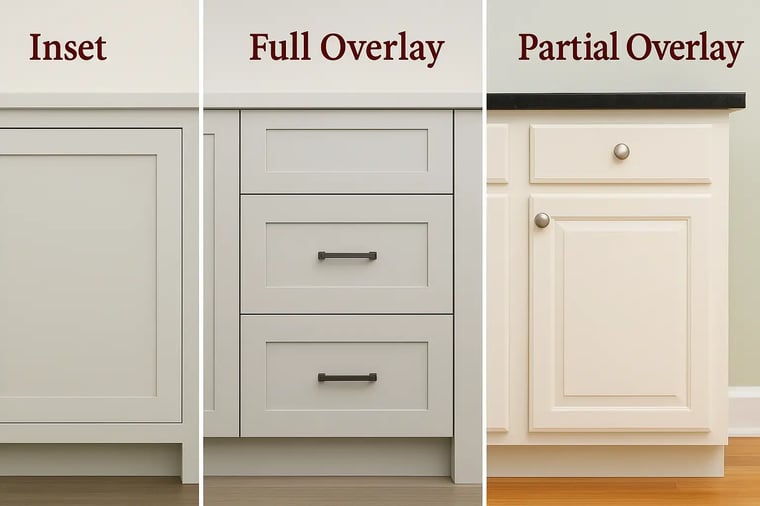
Framed cabinets support three door styles that each have their own benefits and support different design goals.- Full overlay: Full overlay doors almost completely cover the face frame, leaving only an ⅛ inch gap between the doors to allow them to operate. This creates a seamless and continuous look across the span of cabinets. Frameless cabinets typically have full overlay doors.
- Partial overlay: Partial overlay doors leave a greater reveal around the face frame to create definition between each door.
- Inset: Inset cabinet doors sit flush with the frame for a smooth, minimal look. Frameless cabinet doors can also be inset.
Installing partial overlay cabinet doors is relatively easy because they are attached to the face frame, and there is room to adjust the alignment. Full-overlay and inset cabinets, however, require much greater precision.
Learn more about the difference between inset vs. overlay cabinets in our guide.
Door Installation Requirements for Framed Cabinets
Proper door installation on framed cabinets depends on the type of cabinet doors your client chooses and whether they will be full or partial overlay, or inset. Installation will also depend on the type of hinge you’re using. Soft-close, concealed hinges should be chosen based on the desired overlay. For inset doors, choose hinges designed for inset doors. Regardless of the hinges you’re installing, following the hinge manufacturer’s directions will help make the project successful.
When installing doors on framed cabinets, measuring hinges accurately and choosing the right ones is essential. Ensuring the correct tolerance, typically ⅛ inch, will create a consistent gap between the doors or between the door and the frame for inset styles. Getting this tolerance right allows the doors to function properly without rubbing or binding on adjacent doors or the cabinet itself.
Door Installation Requirements for Frameless Cabinets
Frameless cabinet door installation is more difficult than framed cabinet door installation because it has to be incredibly precise to allow the doors to open and close properly. As with hinges for framed cabinets, follow the manufacturer’s instructions for installation, which will include cup hole specifications and clearance needs. European hinge systems are designed to mount directly onto the cabinet box.
Doors should have ⅛ inch of clearance between them, though some tolerances may be smaller. The lower the tolerance, the more precise the alignment will need to be to ensure the doors can open and close without rubbing on each other.
Pros and Cons of Each Construction Type
Pros and Cons of Framed Cabinets
Framed cabinets support traditional and transitional designs, and they come with their own unique pros and cons.
|
Pros |
Cons |
|
|
Pros and Cons of Frameless Cabinets
Frameless cabinets also have pros and cons to consider before making the final decision.
|
Pros |
Cons |
|
|
Comparing Framed vs. Frameless Cabinets Side by Side
The defining difference between framed and frameless cabinets is the presence or absence of a face frame. The box-only design of the frameless style creates a simple and streamlined look, but the cabinets aren’t as stable as framed cabinets. Framed cabinets, on the other hand, offer more stability because the frame minimizes racking. Frameless cabinets offer full access to the interior of the cabinet, though framed cabinets are easier to install.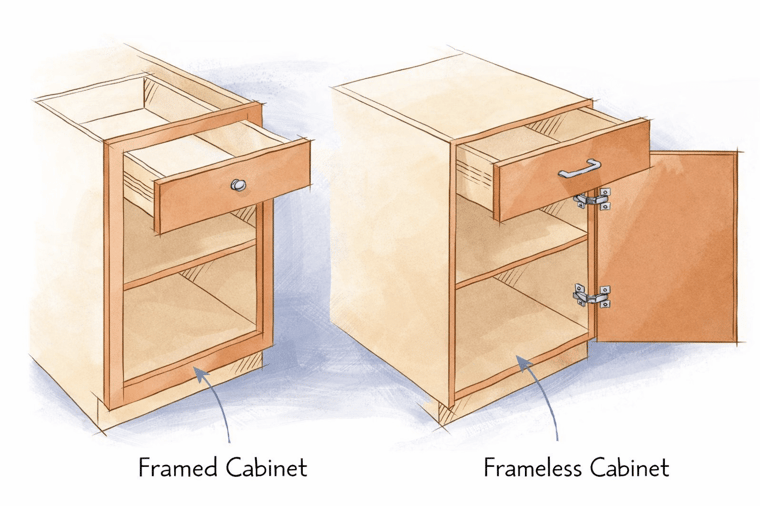
|
Framed Cabinets |
Frameless Cabinets |
|
|
Aesthetic |
Traditional and transitional |
Modern and minimal |
|
Access and storage space |
Less storage space to account for the frame |
Full access and increased storage space |
|
Durability |
More durable and less prone to racking |
More prone to racking and slightly less durable |
|
Hinge installation |
Installed on the face frame |
Installed on the cabinet box |
|
Cost |
More affordable than frameless cabinets |
More expensive than framed cabinets |
|
Construction |
Cabinet box with face frame attached |
Cabinet box with no frame |
|
Installation |
Easy to install |
More difficult to install |
How to Choose Between Framed and Frameless Cabinets for Your Installation Needs
Based on your client’s design goals, their budget, and durability needs, you can recommend the best cabinet for their project. For clients with larger budgets who want a high-end modern aesthetic, frameless cabinets meet these goals, though they won’t be as durable as framed cabinets. Homeowners who lean toward a more traditional design or a transitional style will likely gravitate towards framed cabinets. These are also a good choice for clients who are working with a smaller budget or have a high-traffic kitchen or bathroom that needs added strength and durability.
At Eagle Woodworking, we understand that cabinets come with practical requirements to make them functional in your client’s space. With our custom cabinet door expertise and years in the industry, we can help you make the right recommendations and keep your project on track with 1 to 2 week lead times.

Frequently Asked Questions
What is better, framed or frameless cabinets?
The answer to this question depends on the design and functional cabinet goals. While framed cabinets offer superior strength and durability, frameless cabinets come with a modern aesthetic. Frameless cabinets typically cost more and require more precise installations. Framed cabinets are typically more affordable and easier to install, but they won’t offer the same high-end aesthetic as frameless cabinets. Ultimately, it comes down to each person’s preference and budget.
Are frameless cabinets less sturdy?
While frameless cabinets hold up well, they do tend to be less sturdy than framed cabinets. There also isn’t as much material to go through when attaching cabinets together, which also makes them slightly less sturdy than their framed counterparts.
Are frameless cabinets in style?
Frameless cabinets are the dominant style in Europe and are gaining popularity in the U.S. Overall, whether or not they’re in style depends on the specific kitchen. They’re ideal for sleek, modern and minimal designs and work well in high-end, luxury kitchens.
What hinge types are suitable for framed and frameless cabinets?
Common hinge styles for both framed and frameless cabinets are increasingly soft-close concealed hinges. Exposed hinges and semi-exposed hinges are still used at times, but concealed hinges have become the dominant style. To select a hinge, first determine the desired overlay amount or inset, as well as the door weight, and choose the corresponding hinge. Once they’re installed, use the adjustment screws on the hinges to align the doors properly.
How much reveal is recommended for frameless cabinet doors?
Standard reveal for frameless doors is ⅛ inch, though it can be smaller based on the manufacturer’s recommendations. Use the provided template or a jig to install the hinges in the right position. To maintain consistent gaps, use the adjustment screws on the hinge to align the doors with even gaps all the way around.
Can I install full overlay doors on a framed cabinet?
Yes, you can install full overlay doors on a framed cabinet. To do this, measure the cabinet to order the correct size door and then choose full overlay concealed hinges. Place the hinges according to the manufacturer’s instructions and install the doors. Once the doors are attached, use the alignment screws on the hinges to adjust the door so it’s even and aligned with the doors next to it.
Are specialized tools required for frameless cabinet installation?
Generally, frameless cabinet installation doesn’t require many specialized tools. Installing the doors requires a Forstner bit to drill the hinge cup if it isn’t pre-drilled, but other than that, you’ll need a screw gun, drill bits, driver bits, and a concealed hinge jig.
How do lead times differ when ordering doors for framed versus frameless setups?
Eagle Woodworking offers a 1-week lead time for drawers and a 2-week lead time for custom cabinet doors. Lead times won’t differ based on whether the doors are for framed or frameless cabinets, but other factors, like choosing wood that we don’t keep in stock, can increase lead times. Once you order the cabinet doors, you can schedule the rest of the project based on when the doors and other materials will arrive.