

Cabinet Hinge Types: How to Choose the Right Hinge
Published by
Stephanie Mickelson
on
The right cabinet hinge depends on how the cabinet is built, how the door sits against the opening, and how the hardware attaches to the door. Appearance comes last. This guide compares the main cabinet hinge types and lays out a selection sequence that protects fit, alignment, and installation time across a full run of doors.
In this article:
- Four decisions to make before comparing hinges
- Cabinet hinge types at a glance
- Concealed hinges for face-frame and frameless cabinets
- Inset, full-overlay, and partial-overlay fit
- Semi-concealed, exposed, and specialty hinges
- Features and attachment choices
- Matching the boring to the hardware
- Common selection mistakes
Start with Four Decisions Before Comparing Cabinet Hinge Types
Hinge shopping goes faster when you settle the inputs first. Four of them decide most of the selection for you:
- Cabinet construction. Is the box face-frame or frameless? The mounting hardware differs between the two even within the same hinge family.
- Door position. Will the door sit inset, full overlay, or partial overlay? Then confirm the actual overlay dimension for the project, since the layout, adjacent doors, and fillers can push it away from the typical number.
- Visibility. Should the hinge be hidden, partly visible, or fully exposed when the door is closed?
- Attachment and boring. Will the hinge screw on or press in tool-free, and does the door's boring match that choice?
Soft-close, opening angle, and adjustability sit in a separate feature layer. They refine a selection you've already made on the four points above; they don't replace any of them.
Cabinet Hinge Types at a Glance
|
Hinge category |
Visible when closed? |
Common fit |
Key selection check |
|
Concealed (European) |
No |
Face-frame and frameless, inset or overlay |
Match the hinge to the cabinet construction and the actual overlay |
|
Semi-concealed |
Partly, along the frame edge |
Face-frame cabinets, usually partial overlay |
Confirm the exposed portion suits the job before ordering |
|
Exposed / surface-mounted |
Yes, fully |
Traditional and period work |
Decide whether the visible hardware is the point or a compromise |
|
Specialty (wrap, pivot, swing-clear) |
Varies |
Non-standard door positions |
Confirm the application genuinely calls for one |
Specialty hinges solve specific positioning problems, and Eagle's catalog hinge solutions cover standard cabinet-door applications rather than blind corners, angled doors, or other special positions. If your project includes one of those, source that hardware for the application itself.
Concealed Cabinet Hinges for Face-Frame and Frameless Cabinets
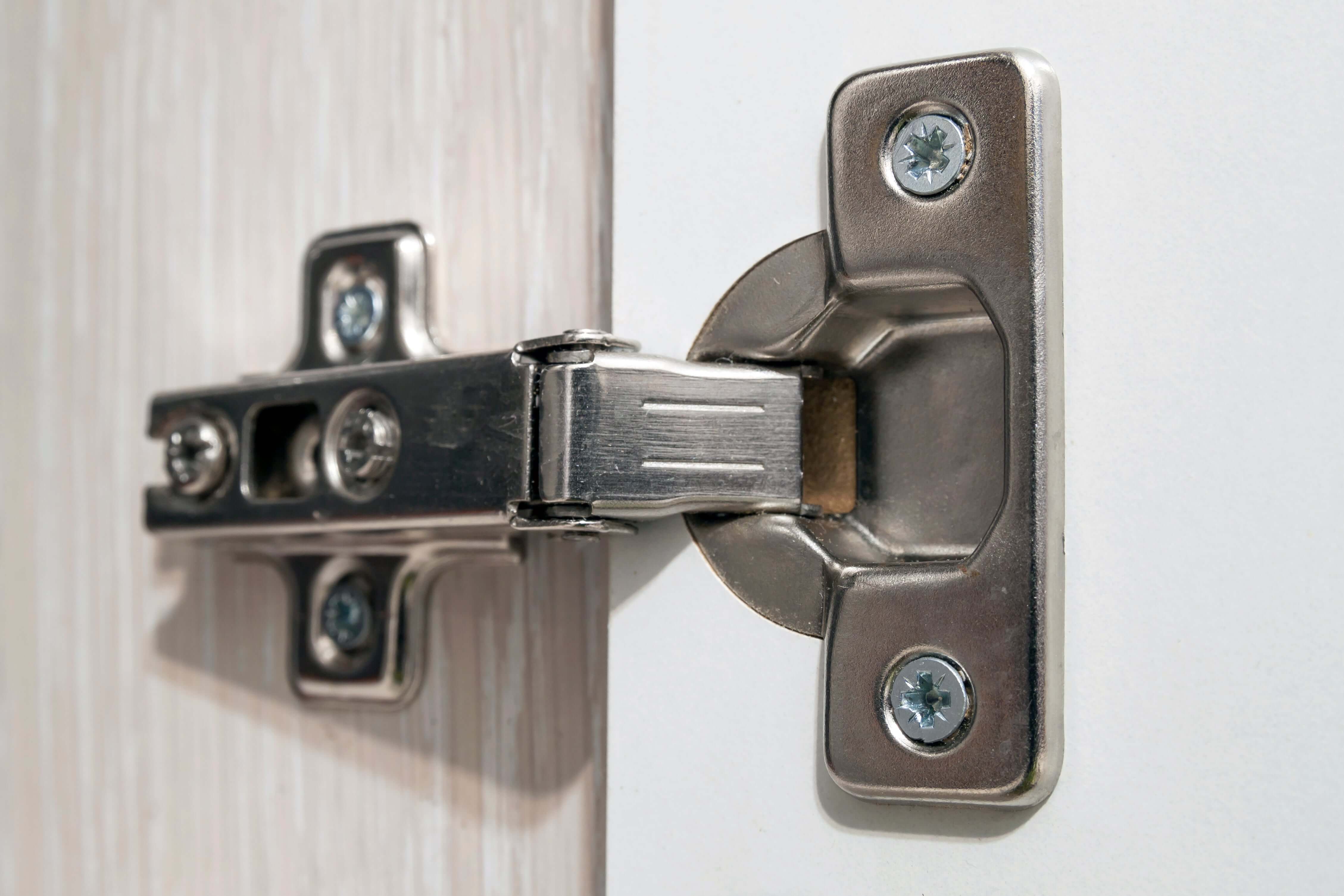
Concealed hinges, also called European hinges, disappear completely when the door closes. A cup on the door engages an arm on the cabinet side, and nothing shows from the front. That clean look, plus built-in adjustability, is why they dominate modern cabinet work.
Cabinet construction and door position are separate questions here, and both still apply. Face-frame and frameless cabinets can each run concealed hinges; what changes is the mounting setup on the cabinet side. In Eagle's catalog, every hinge is a concealed Blum hinge with BLUMOTION soft close. Face-frame COMPACT hinges mount directly to the frame with no separate plate. CLIP top hinge kits pair the hinge with the applicable mounting plate for the cabinet type, including inset face-frame work and all frameless configurations.
For selection purposes the job is short: identify the construction, confirm the door position, and the concealed hinge that fits follows from there.
Inset, Full-Overlay, and Partial-Overlay Hinge Fit
Door position describes where the door lands relative to the cabinet opening:
- Inset doors sit inside the opening, flush with the cabinet face.
- Full-overlay doors cover most or all of the face frame or box edge.
- Partial-overlay doors cover part of the opening and leave some frame showing.
Each position takes a different hinge, so this decision has to be locked before the hinge or the boring. The overlay figures you see on order forms and configurators, including Eagle's, are the common configurations for each construction type. A face-frame partial overlay is typically 1/2 inch, for example, and a given project can still land somewhere else depending on the cabinet layout. The actual overlay governs door sizing, so measure it on the project rather than assuming the listed number.
Get the cabinet type and the real overlay down on paper together. Those two facts point to the hinge, the boring, and the door size in one pass.
Semi-Concealed, Exposed, and Specialty Hinges
A semi-concealed hinge splits the difference. The door wing hides behind the door while part of the hinge remains visible along the face frame when the door is closed. You'll find them on partial-overlay face-frame work where a small band of visible metal is acceptable or even wanted.
Exposed and surface-mounted hinges put the full hardware on display. On period reproductions, painted farmhouse work, and some commercial jobs, the visible barrel and leaves carry the design. Selection is mostly aesthetic once the door position is confirmed, and mounting details stay with the installation resources for that hardware.
Specialty hinges cover positions a standard hinge can't reach. Wrap hinges wrap the frame edge, pivot hinges rotate the door from top and bottom points, and swing-clear hinges move the door fully out of the opening. Treat each as an application-specific answer rather than a general upgrade, and match any of them to the exact door, weight, and position with the manufacturer's specs in hand.
Features and Attachment Choices That Affect the Final Selection
With the category settled, features narrow the field. Soft-close dampens the last inch of travel. Opening angle determines how far the door swings and matters near walls, appliances, and pullouts. Three-way adjustability lets an installer fine-tune gaps after hanging. Tool-free attach and detach speeds up finishing and service work. None of these changes the mounting category; two hinges can share every feature and still fit entirely different cabinets.
Attachment method is the feature that reaches back into the door itself:
- Screw-on hinges fasten through the cup with screws and pair with cup-only boring.
- INSERTA hinges press in tool-free and require cup-and-dowel boring.
Either method works on any door that carries the matching boring. That makes the attachment decision a boring decision, which is why it belongs on the order, before anything gets drilled.
Expert Eagle Insight
Here at Eagle, we turned this article's four-decision sequence into a tool: the hinge configurator on our Door Hinges Guide takes your cabinet type and overlay style - face frame or frameless, full overlay, partial, or inset - and returns the recommended hinge boring and hinge for that setup, with a toggle for screw-on versus tool-free INSERTA. The full decision table is published on the same page, down to the Blum part numbers and mounting plates, so you can see exactly why a face-frame inset job gets a CLIP top with a 9 mm frame plate while frameless work runs on 0 mm plates. Two minutes there settles construction, position, attachment, and boring in one pass, before anything is ordered.
The same logic is built into our doors order form, and that's what protects a multi-door run: you declare the cabinet type and overlay once, and the matching boring, hinge, and plate apply to every door on the order - there's no per-door hardware decision left to get wrong on door fourteen. The measurement to resolve before you declare is the actual overlay. The figures on the configurator are the common ones - 1-1/4" face-frame full overlay, 1/2" partial - and most projects land there, but fillers, adjacent doors, and layout quirks can push a job off the typical number. Measure the overlay on the project, check it against the configurator's options, and if yours doesn't match one, that's a conversation to have with us before the order, not a gap to adjust out after the doors arrive.
Match the Hinge Boring to the Hardware Before Ordering or Drilling
Boring is part of the hinge decision, made at the same time as the hinge itself. A door drilled for one attachment method won't accept the other, and re-boring a finished door is a problem nobody wants on site.
The useful numbers are few. Standard concealed-hinge boring uses a 35 mm cup, and Eagle's catalog hinge kits bore to a single 13 mm depth. Cup-only boring pairs with screw-on hinges; cup-and-dowel boring pairs with INSERTA. Panels and drawer fronts never receive hinge boring, so anything ordered as a panel or front arrives undrilled by design.
At the selection stage, specify the hinge, attachment method, and boring together on one order; the drilling details follow from the hardware itself.
Common Cabinet Hinge Selection Mistakes
Most hinge problems trace back to a skipped input rather than a bad product. The recurring ones:
- Choosing a hinge before identifying face-frame or frameless construction
- Treating a configurator's common overlay figure as the project's actual overlay
- Ordering a screw-on or INSERTA hinge that doesn't match the door's boring
- Calling soft-close a hinge type and filtering the search by it, when it's a feature available across mounting categories
- Assuming a standard hinge kit handles a blind corner, angled door, or another specialty position
- Drilling or hanging before the hinge, boring, door size, and opening have been reconciled against each other
Each of these is cheap to catch on paper and expensive to catch on a finished door. Run the four-decision sequence and the list above stops applying to your projects.
Choose the Hinge and Cabinet Door as One System
A hinge order that works is really five facts agreeing with each other: cabinet construction, door position, actual overlay, attachment method, and boring. Lock all five before anything is drilled or ordered and the doors go on straight the first time.
Eagle builds that agreement into the order itself. You supply the cabinet type and overlay style; Eagle recommends the hinge boring and hinge kit and determines the quantity from your door sizes. Submitting the door specs and hinge inputs together means the doors and hardware get matched during quoting and Eagle's order review, before a single door hits the line. When your next project calls for ordering custom cabinet doors with the hinges already sorted, send the specifications through and the matching is handled for you.
Frequently Asked Questions
What are the main types of cabinet hinges?
The main categories are concealed (European) hinges, semi-concealed hinges, exposed or surface-mounted hinges, and specialty hinges such as wrap, pivot, and swing-clear designs. Concealed hinges are the standard choice for most modern face-frame and frameless cabinet work.
What is the difference between concealed, semi-concealed, and exposed hinges?
The difference is what shows when the door is closed. Concealed hinges are fully hidden, semi-concealed hinges leave part of the hinge visible along the face frame, and exposed hinges display the full hardware on the cabinet face.
What type of cabinet hinge do I need?
Work through four inputs in order: cabinet construction (face-frame or frameless), door position (inset, full overlay, or partial overlay) with the actual overlay confirmed, how visible the hinge should be, and whether the attachment is screw-on or INSERTA with matching boring. Those four answers identify the hinge; features like soft-close narrow it from there.
What is the difference between inset and overlay hinges?
Inset hinges hold a door that sits inside the cabinet opening, flush with the face. Overlay hinges hold a door that covers the opening, either fully or partially. The two door positions require different hinges, and the actual overlay dimension also determines the door size.
When does a cabinet project need a specialty hinge?
Only when the door position falls outside standard applications: blind corners, angled cabinets, doors that must swing fully clear of the opening, or similar situations. Standard concealed, semi-concealed, and exposed hinges cover typical inset and overlay doors on face-frame and frameless cabinets.
Tags:
Doors