When it comes to kitchen cabinet door styles, the choice you make does more than shape the look of the space. It also affects how your cabinets function, how easy they are to clean, and how well they hold up over time. Whether you’re designing a new kitchen, planning a bathroom remodel, or sourcing components for a client build, the cabinet door is one of the first details people notice.
In this guide, we’ll show you examples of different cabinet door styles and comparisons between them as well as offer guidance for selecting the right one for your project.
In this article:
- What Are Cabinet Door Styles?
- Common Cabinet Door Styles
- Modern vs Traditional Cabinet Door Styles
- Framing Options
- Materials Used in Cabinet Doors
- Finish and Aesthetic Considerations
- How to Choose the Right Cabinet Door Style
- Trending Cabinet Door Styles (2026)
- Frequently Asked Questions
What Are Cabinet Door Styles?
Cabinet door styles refer to the look of the cabinet door when the doors are closed. Cabinet door installation falls into two broad categories — overlay and inset. Overlay doors cover all or part of the cabinet frame or box while inset cabinet doors sit inside of it. While cabinets can be constructed to include customized storage, pull-out drawers, and adjustable shelving, the cabinet door is what helps to guide the room’s design and is one of the first things people notice when they walk in.
Common Cabinet Door Styles
Choosing a cabinet door style comes down to more than looks. Each one creates a distinct feel in the room, and the design you choose affects how your kitchen or built-in space functions. Here’s a look at some of the most popular options and where they tend to work best.
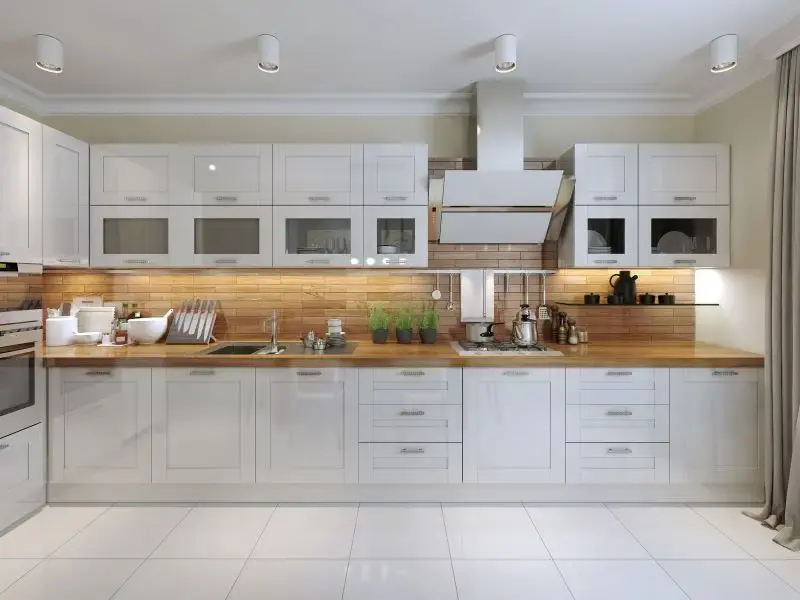
1. Shaker
Shaker cabinet doors are one of the most recognizable and widely used styles. They feature a five-piece construction with a flat center panel and square door frame. The clean lines give them a simple, balanced look that works in almost any room.
Shaker-style doors are practical and easy to clean. The only downside? Dust can collect in the corners if you don’t wipe them regularly.
Best use cases: Transitional or classic kitchen; can also compliment modern styles
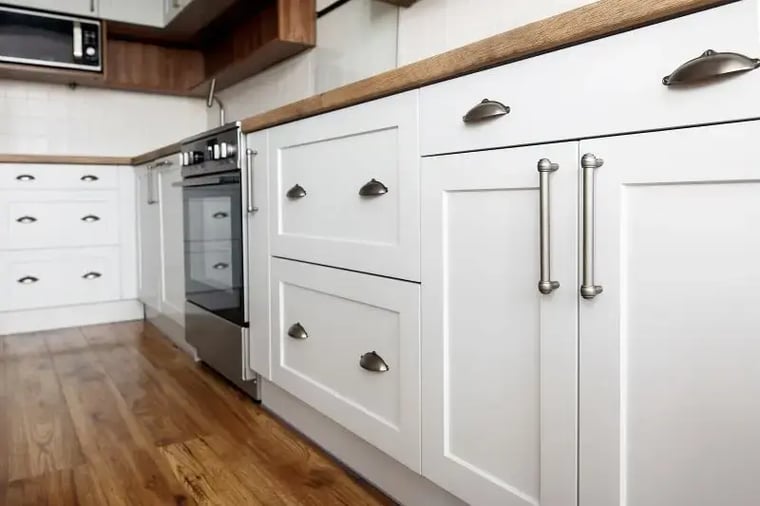
2. Slab
Slab doors are flat, smooth panels with no detailing. They’re often made from MDF or plywood and are a favorite in modern kitchen designs because of their minimal, streamlined appearance.
They’re easy to wipe down and give any space a clean finish. While they offer less texture than other styles, that’s also part of their appeal.
Best use cases: Simple designs in modern and contemporary kitchens
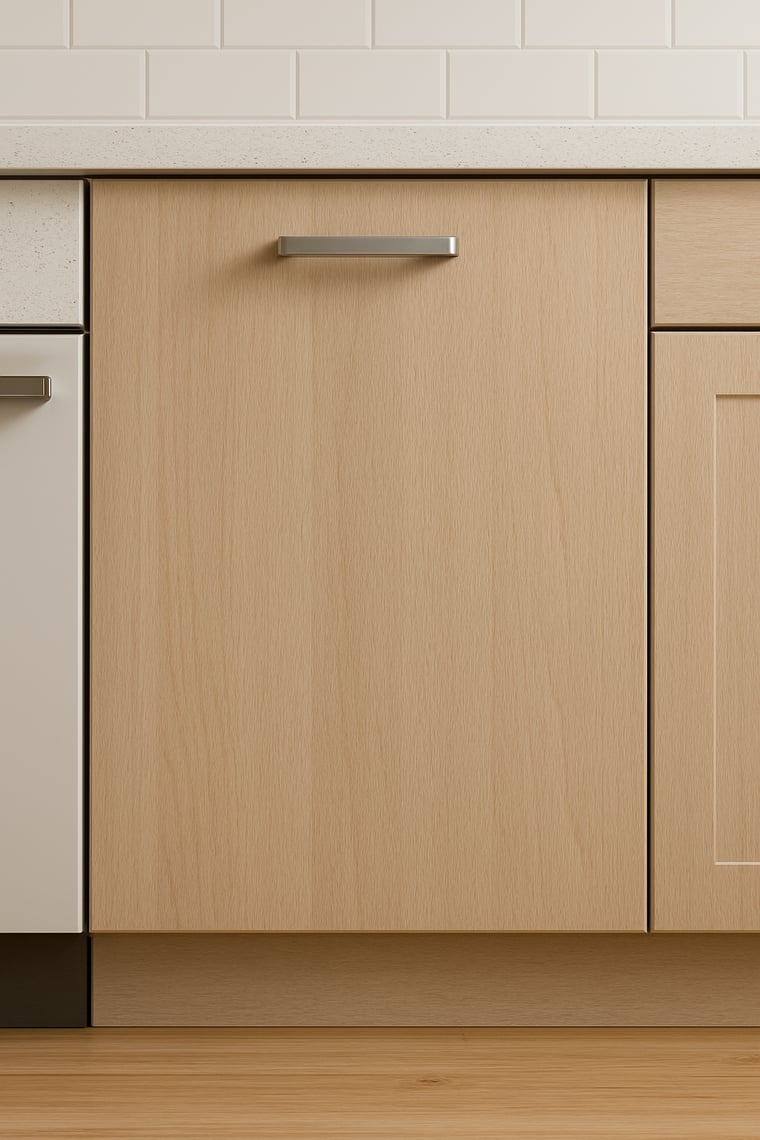
3. Raised Panel
A raised panel cabinet door has a center panel that’s slightly higher than the surrounding frame. You’ll often see this style in traditional kitchen cabinetry, especially when paired with crown molding or classic trim.
It’s a decorative look that adds depth to the front of the cabinet. Raised panel doors do take a little more time to clean, but many homeowners feel the detail is worth it.
Best use cases: Traditional kitchens

4. Recessed (Flat) Panel
Flat panel cabinet doors have a center panel that’s slightly set back into the door frame. This simple, understated look fits well in both modern and transitional kitchens. Shaker doors are a type of recessed panel door—they’re simply the most popular variation. Because of their widespread use, they’re often treated as their own category, even though they fall within the recessed panel family.
It’s a subtle style with clean lines and no extra ornamentation. It doesn’t draw attention to itself, which makes it ideal for projects where the finish or material is the main feature.
Best use cases: Modern, yet timeless designs; also works well with transitional styles
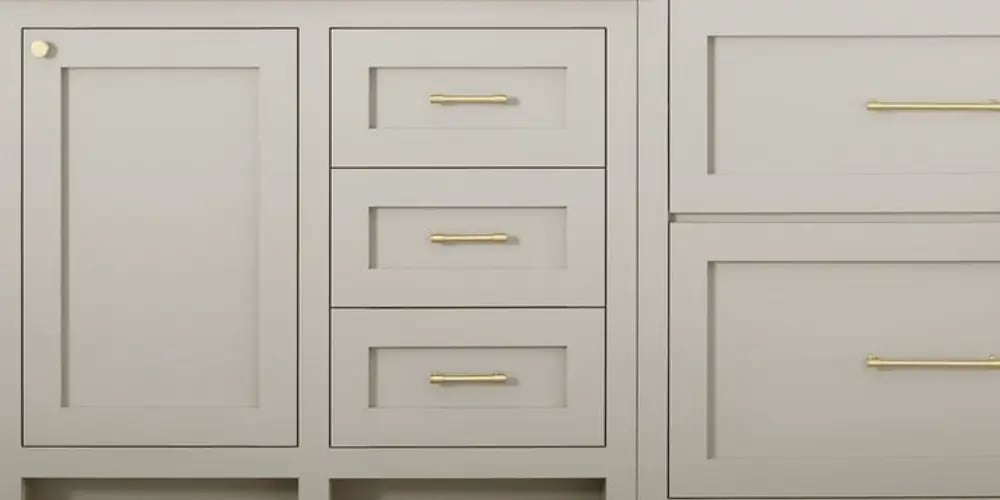
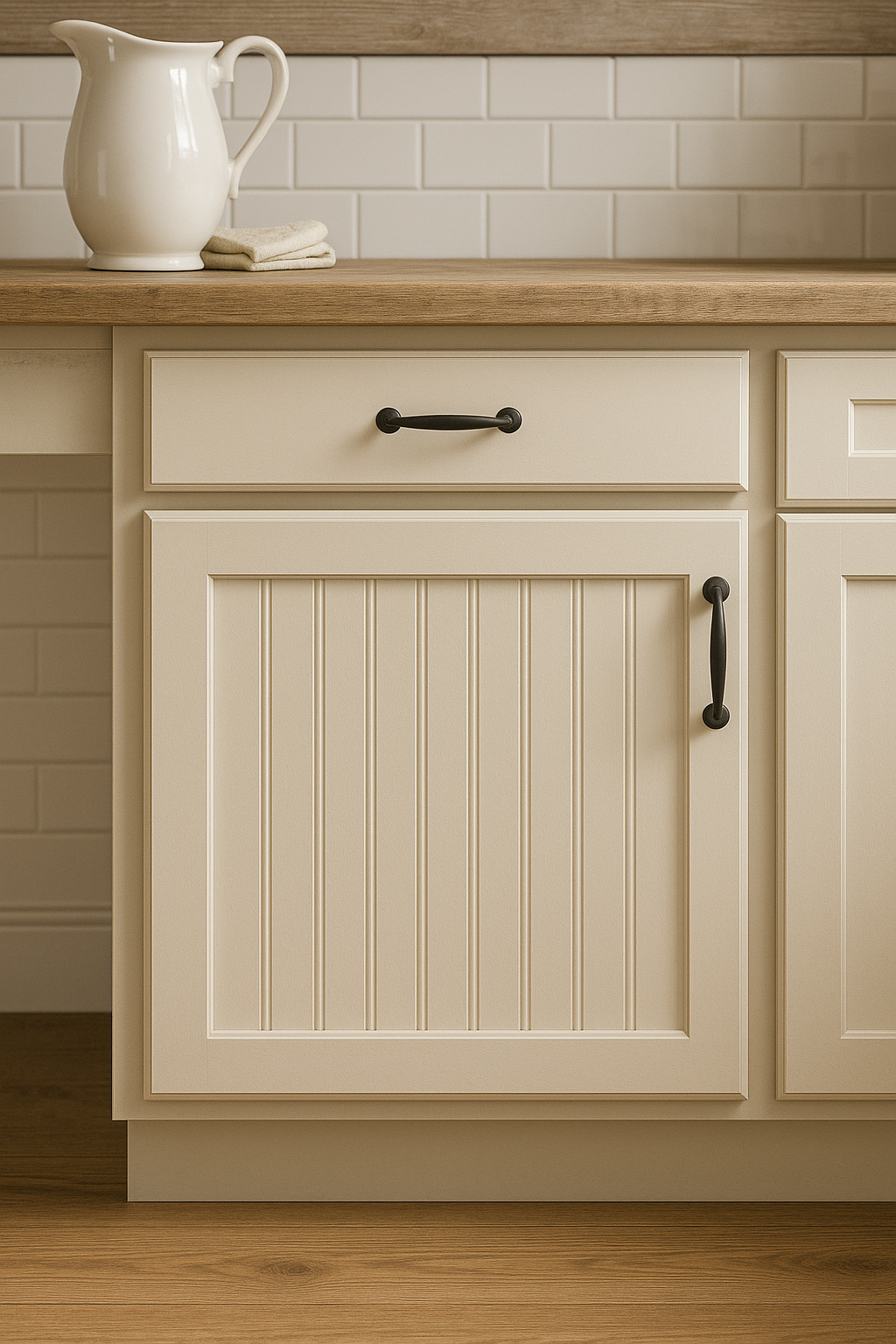
5. Beadboard
Beadboard doors have a planked center panel with narrow vertical grooves. This gives them a cozy, casual vibe that fits well in farmhouse kitchens, beach houses, or vintage-inspired spaces.
They add texture and warmth, but keep in mind the grooves can collect dust more easily than a smooth panel.
Best use cases: Traditional designs that benefit from added details
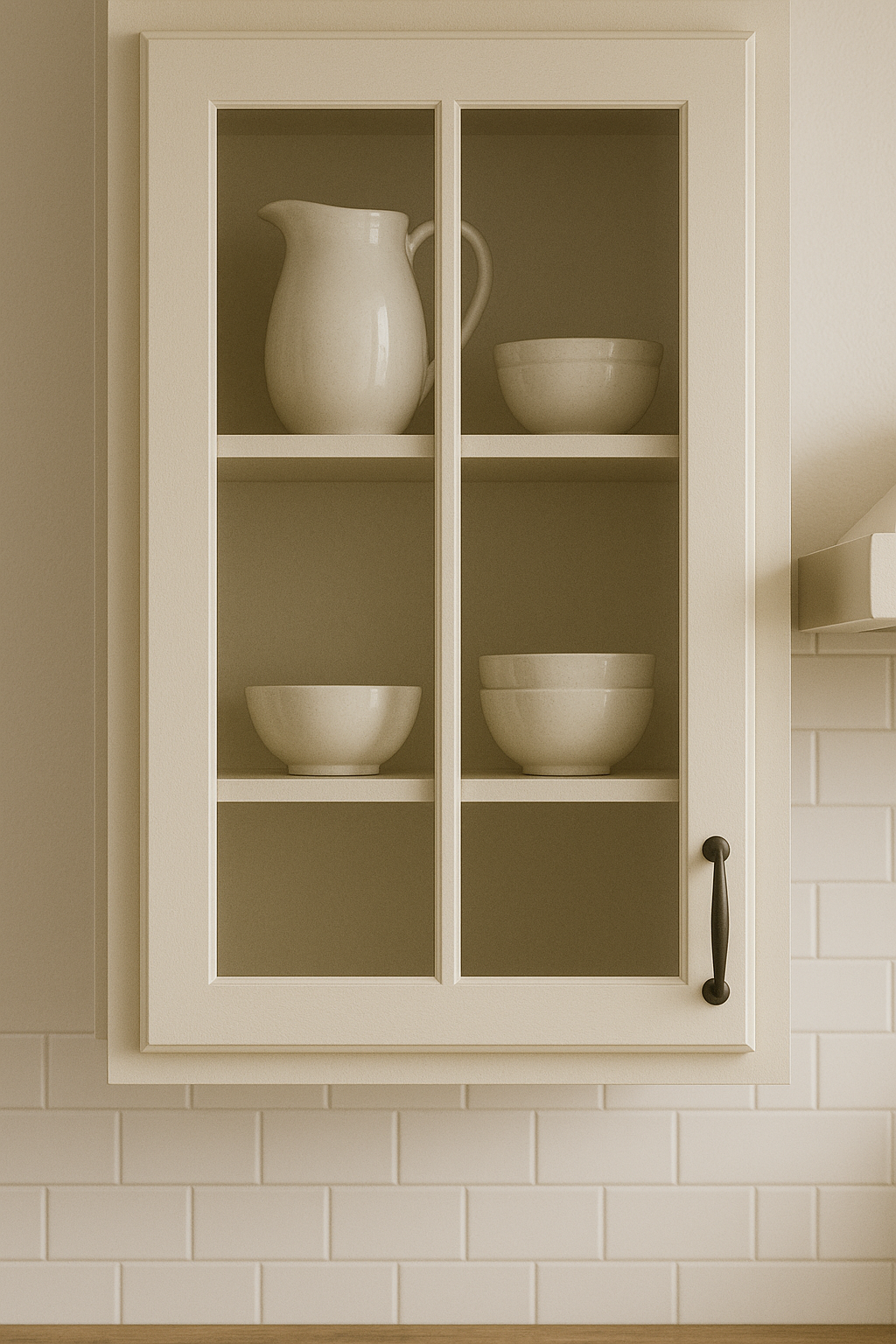
6. Glass-Front
Glass cabinet doors are framed around a glass insert, letting you display what’s inside the cabinet. They’re often used in upper cabinets or open shelving layouts to break up solid doors.
This style can lighten up the room and make it feel more open. Just be prepared to keep things tidy behind the glass.
Best use cases: Cabinets used to display functional or decorative items; areas that need some open space
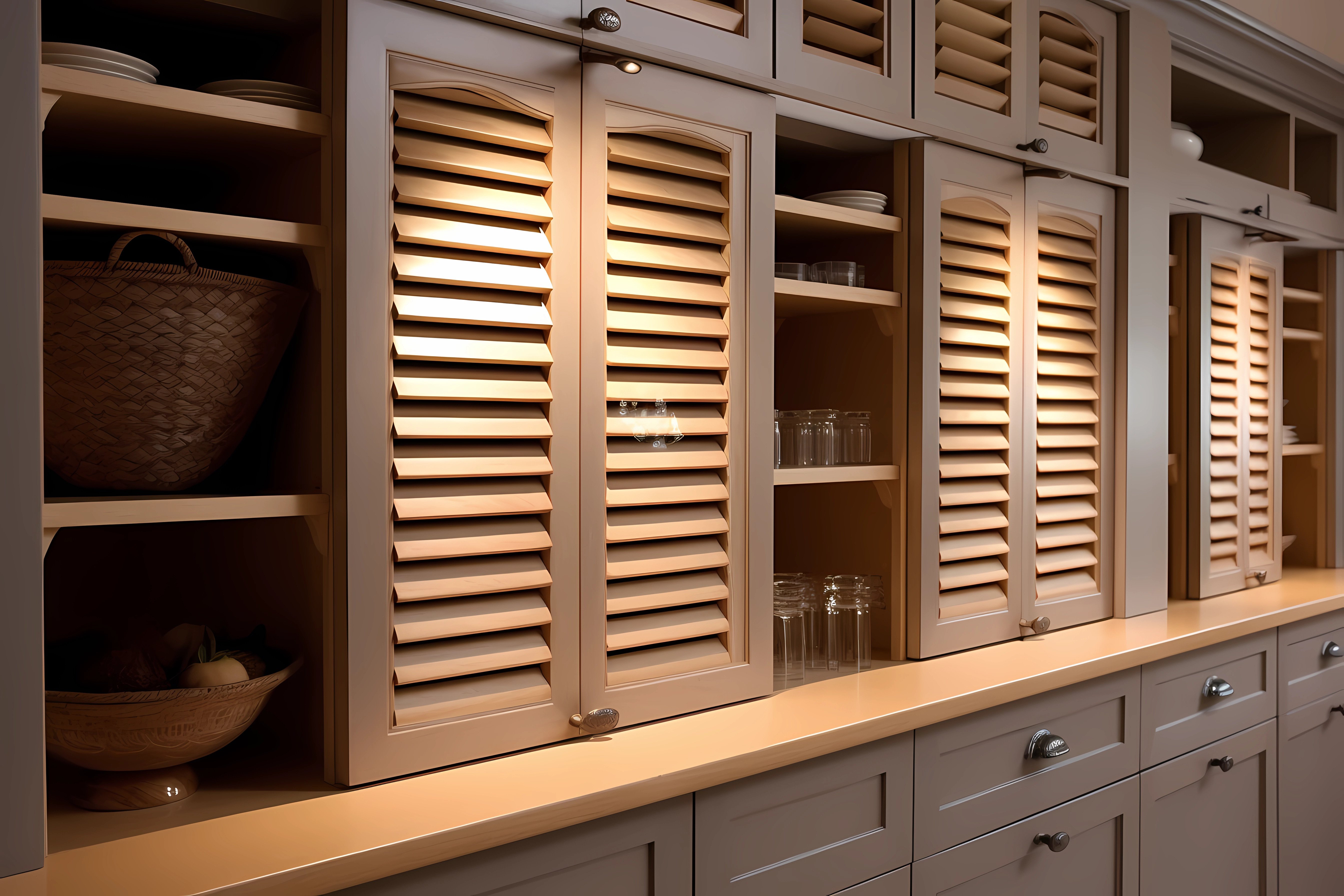
7. Louvered
Louvered doors have fixed horizontal slats across the panel. You won’t see them in every kitchen, but they’re sometimes used for accent pieces or areas that need airflow, like a pantry or laundry cabinet.
They offer a distinct look, though they can be trickier to clean and aren’t as versatile as other options.
Best use cases: Designs that benefit from an accent or for pantries or laundry rooms that need air flow
Modern vs Traditional Cabinet Door Styles
When deciding between modern versus traditional cabinet door styles, it’s important to take the overall design into consideration. This table compares the two styles to help you decide on the best cabinet door style for the home.
|
Modern |
Traditional |
|
|
Design feel |
Clean and simple |
Detailed and embellished |
|
Common styles |
Slab, shaker, glass-front, recessed (flat) panel |
Raised panel, louvered, beadboard |
|
Best rooms |
Kitchen, laundry room, office, mudroom |
Kitchen, laundry room, office, mudroom |
|
Common materials |
White oak, maple, walnut, MDF |
Walnut, mahogany, red oak, MDF |
|
Popular finishes |
Light stains and soft, neutral paint colors, including tans, browns, and greens |
Darker stains and rich, deep paint tones, whites and beiges |
Framing Options
When it comes to how cabinet doors are mounted, there are two main types of cabinet construction types: framed and frameless.
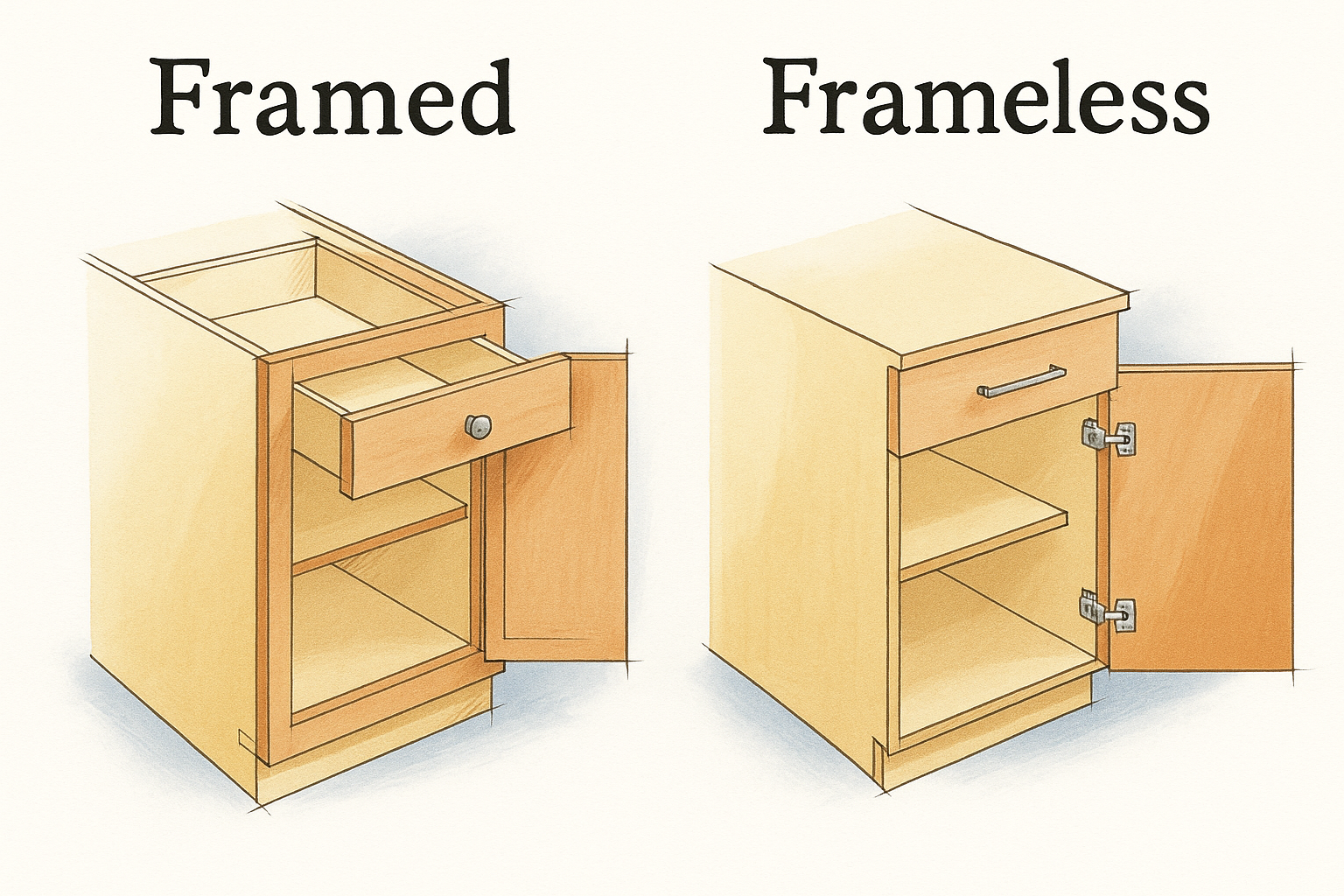
Framed cabinets have a face frame that runs around the front of the cabinet box. The doors attach to this frame, which adds strength and a more traditional look. You’ll often see this construction in classic or transitional kitchen designs. Framed cabinets are the go-to construction technique for high-end cabinetry, particularly inset.
Frameless cabinets, sometimes called “European-style,” skip the face frame. The doors attach directly to the sides of the cabinet box. This creates a cleaner, more modern appearance with tighter gaps between doors and drawers. Frameless styles work well for contemporary kitchens and are often paired with full overlay cabinet doors for a sleek, seamless look.
Framed cabinets are sturdy and forgiving during installation, while frameless styles offer a little more storage space and a more modern feel. The best choice depends on your layout, design vision, and how much access you want inside each cabinet. Most stock or semi-custom cabinetry utilizes frameless construction.
Materials Used in Cabinet Doors
The material you choose for your cabinet doors affects everything from durability to finish. Some materials work better in busy kitchens, while others are a better fit for paint or detail work. Here’s a closer look at the most common options.
Solid Wood
Solid wood is a classic choice for cabinet doors, offering strength, natural beauty, and a wide variety of finishes. Whether you're using maple, white oak, or walnut, each wood type has its own grain, color, and character. Solid wood is ideal for stained finishes that show off the natural pattern of the material, but is also widely used in painted doors.
This is a great option for long-term durability and a high-end look. Just keep in mind that solid wood can expand and contract slightly with changes in temperature and humidity, so it's important to use high-quality construction techniques. Today, most cabinet doors will pair hardwood frames with either a MDF center panel for painted doors or a veneer center panel for stain-grade doors. This allows the door to maintain the strength of the hardwood frame while preventing warping and cracking over time from wood expansion in the center panel.
MDF
MDF (medium-density fiberboard) is a paint-grade material made from compressed wood fibers. It creates a smooth, consistent surface that's perfect for modern cabinet doors or styles with painted finishes.
MDF cabinet doors are also budget-friendly, making them a practical choice for many projects. MDF won’t warp or crack like solid wood, but it can warp at larger sizes, which has been negated with modern techniques that construct 2-piece MDF doors. It's a good fit when you need clean lines, sharp profiles, or a solid base for bold colors.
Thermafoil
Thermafoil cabinet doors are made by fusing vinyl laminate to an MDF core via heat and pressurization. Thermofoil is a cost-effective material that requires no finishing and is resistant to moisture and warping, making it a good choice for kitchens, bathrooms and any other high-humidity area. However, thermofoil cabinet doors are not heat resistant, and they tend to chip along the edges. They also have a shorter lifespan compared to solid wood.
Finish & Aesthetic Considerations
The cabinet door finish shapes the space's look and its durability under daily use. From paint colors to edge details, every choice adds to the style and personality of the finished product.
Painted vs. Stains
Painted cabinet doors offer a smooth, even finish and allow for a wide range of color choices. They’re especially popular with MDF or maple cabinet doors and clean-lined styles like Shaker doors. Paint works well in modern kitchens or anywhere you want a crisp, clean look.
Stained finishes, on the other hand, bring out the natural grain of solid wood doors. They’re a great way to showcase the warmth and character of materials like white oak or walnut. While painted finishes may chip over time, stained doors tend to wear more gracefully and can be easier to touch up.
Decorative Elements
If you're looking to add personality or texture, decorative elements can help set your cabinet doors apart. Mullions are decorative grid patterns that overlay glass-front doors, often used in display cabinetry. Edge profiles shape the outside of the door frame and can range from sharp and simple to soft and curved, depending on the style you want.
Grooves and beading in the center panel or along the frame can add depth or give a nod to traditional design. These small touches might seem subtle, but they can completely change the feel of the door and the overall space around it.
How to Choose the Right Cabinet Door Style
Finding the right cabinet door isn’t just about style. It’s about how that door fits the space, how it holds up to daily use, and how well it pairs with the rest of your cabinetry.
Home style and function
Cabinet doors play a major role in how a space looks, functions, and feels day-to-day. Taking the overall home style into account — traditional, contemporary, modern, or transitional — will give you a good starting point when choosing a cabinet door style. Another factor to consider is who will be using the cabinets. A busy home with lots of kids, for instance, will have different needs than a home with an older couple.
Room size
Considering the room size can impact the cabinet door style choice. Large rooms are able to handle more detailing as seen in a beadboard or raised panel design. In smaller rooms, more detailed doors can pull a lot of the focus, but a simple design can make the space feel more open.
Budget
Some doors cost more upfront but offer better value over time. For example, solid wood cabinet doors might carry a higher price tag than MDF, but they hold up better in high-use spaces. They can also be refinished instead of replaced to further extend their lifespan. On the flip side, MDF or veneered options keep costs lower at the outset and still look great, especially when paired with the right finish, but they won’t last as long and can’t be refinished the way that hardwood can.
Choosing the right cabinet door material depends on the balance you need between appearance, durability, and price. No matter your budget, there’s a well-made option that fits your project.
Maintenance
Simple designs require less maintenance because there are fewer nooks and crannies to gather dust or drips. For high-use kitchens, slab cabinet doors make cleaning easy. Choosing beadboard, raised panel, or shaker cabinet doors means more maintenance as dust can get trapped in the edges. Considering the desired maintenance level can help guide you towards the right cabinet door style.
Custom vs stock doors
Custom doors come with unlimited style and design options while stock cabinet doors are available with a limited selection of styles and finishes. For those on a tighter budget, stock doors are a viable option, especially if the cabinets are standard sizes and simple design styles work with the overall room.
If the cabinet boxes have irregular dimensions or the space needs a custom design to blend in with the rest of the room, custom doors are a built-to-spec option that can accommodate any size needs. Eagle Woodworking offers an easy online ordering process with no minimum orders, excellent customer support, and 1–2 week lead times to keep your project on track.
Trending Cabinet Door Styles (2026)
Modern design styles that feature slim shaker or flat panel doors are trending in 2026. Kitchen cabinet color trends include natural wood tones, soft neutrals, and mixed materials like wood, glass, and metal. While traditional cabinet door styles still have their place, 2026 trends are moving towards modern and contemporary cabinet styles and finishes.
At Eagle Woodworking, we offer a full range of cabinet doors, from traditional raised panel cabinet doors to modern flat panel options. Our team works with contractors, designers, and homeowners to create premium-grade components that fit perfectly and hold up beautifully over time. Explore our cabinet doors to find the right match for your next project.
Frequently Asked Questions
What are the most popular cabinet door styles?
The most popular cabinet door styles are shaker for a modern and contemporary look. Traditional styles, like raised panel and beadboard, are still popular for more traditional homes.
Which cabinet door style is best for small kitchens?
Small kitchens benefit from simple cabinet door styles to keep the room from feeling too closed in or cluttered. Shaker and slab cabinet doors help small kitchens or laundry rooms feel open, giving them a larger feel.
Are Shaker cabinets modern or traditional?
Shaker cabinets fall into the transitional category, meaning they work well in both modern and traditional designs. Their clean lines and simple frame construction allow them to adapt easily based on surrounding finishes, hardware, and color palettes.
What cabinet door style is easiest to clean?
Slab cabinet doors are the easiest to clean because there aren’t any edges, deep profiles, or recessed details where dust and dirt can collect. The smooth surface allows for quick wipe-downs and simple maintenance, making them a practical choice for high-traffic kitchens and bathrooms.
What are the three styles of cabinets?
The main cabinet door styles are inset, partial overlay, and full overlay. Each one affects how the door sits on the cabinet box and changes the look of the face frame or frameless structure.
What is an inset cabinet door?
Inset doors fit inside the cabinet frame, sitting flush with the face of the cabinet. This creates a clean, built-in look with tight spacing and a more custom finish.
What are the different types of cabinet hinges?
Common hinge types include concealed hinges (used in frameless and full overlay designs), semi-concealed hinges, and exposed or decorative hinges for traditional or inset styles.
What type of cabinet door is easiest to clean?
Slab cabinet doors are the easiest to wipe down. Their flat surface has no grooves or panel edges, making them ideal for kitchens with high traffic or mess-prone areas.
Are slab doors good for humid environments?
They can be, especially when made from properly sealed MDF or moisture-resistant plywood. In high-humidity spaces, it’s important to choose a finish that protects the material underneath.
Can I paint over stained cabinet doors?
Painting over stained cabinet doors is not recommended. Even with sanding and primer, the wood grain will still show through the paint, which can result in an uneven or textured appearance. For a smooth, professional finish, it’s best to start with paint-grade MDF or a tight-grain hardwood specifically intended for painting.
Which cabinet door style is best for small kitchens?
Flat panel or glass-front cabinet doors can help make a small kitchen feel more open. Lighter finishes also reflect light and make the room feel larger.
Do certain styles increase resale value more than others?
Neutral styles like Shaker doors or flat panels tend to appeal to more buyers and hold their value longer. High-quality materials and clean finishes make a difference in how the kitchen feels to future homeowners.