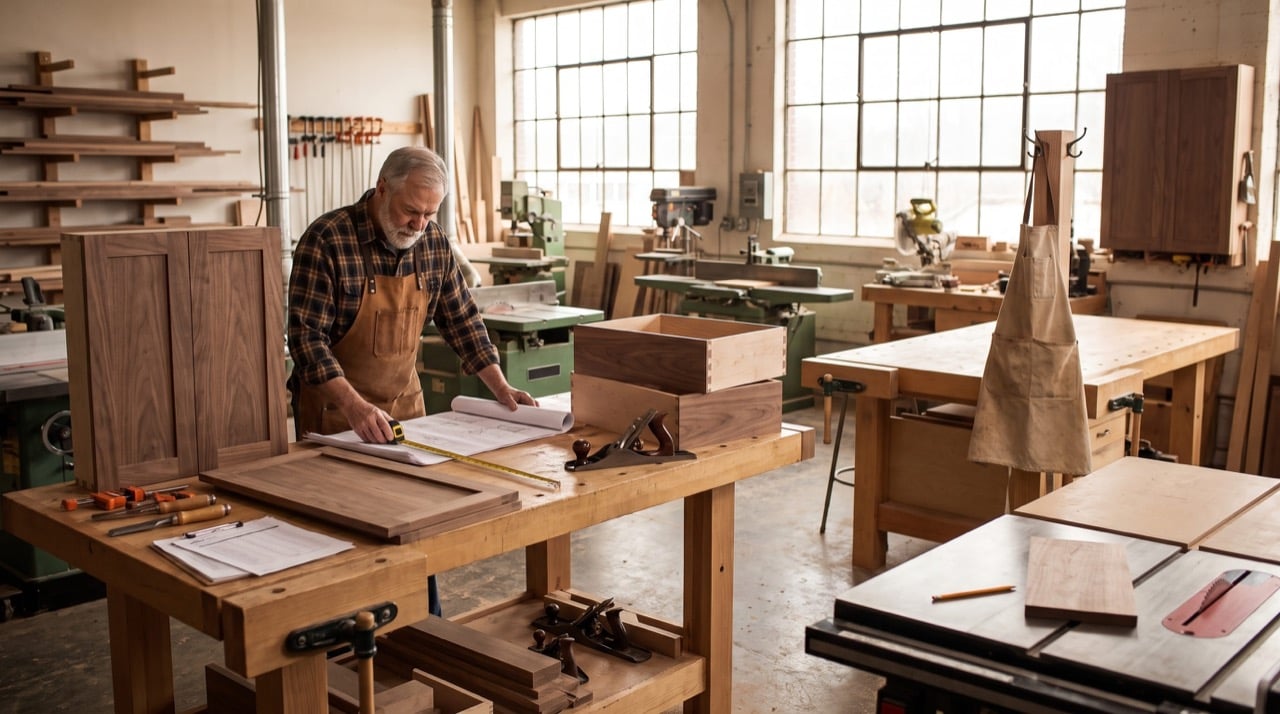
When construction and trades professionals are asked which single trade the skills shortage will hit hardest, they don't name electricians or plumbers first. They name the carpenters and woodworkers, and the consequence they point to most isn't a blown budget or a slipped schedule. It's a decline in the quality of the work itself.
We surveyed 500 U.S. construction and trades professionals, a mix of contractors, tradespeople, project managers, and builders, to understand where the skilled-labor shortage is landing hardest and what it's doing to the work.
The results describe a shortage that has moved well past a hiring inconvenience. Respondents report turning down jobs they can't staff, paying more and waiting longer for the work that does get done, and watching the most experienced hands in the trade age out faster than anyone is replacing them.
One finding cuts through the rest. The shortage isn't mainly a story about too few workers. It's a story about too few skilled ones, and in a trade built on craft, that's where the real damage shows up.
Four patterns run through the data, and together they explain who the shortage hits, what it breaks first, and why it's likely to get worse before it gets better.
Quick Summary: Four Insights From the Data
These four findings reframe the labor shortage from a scheduling headache into a threat to the quality of the build itself.
1. Woodworking Sits at the Center of the Shortage
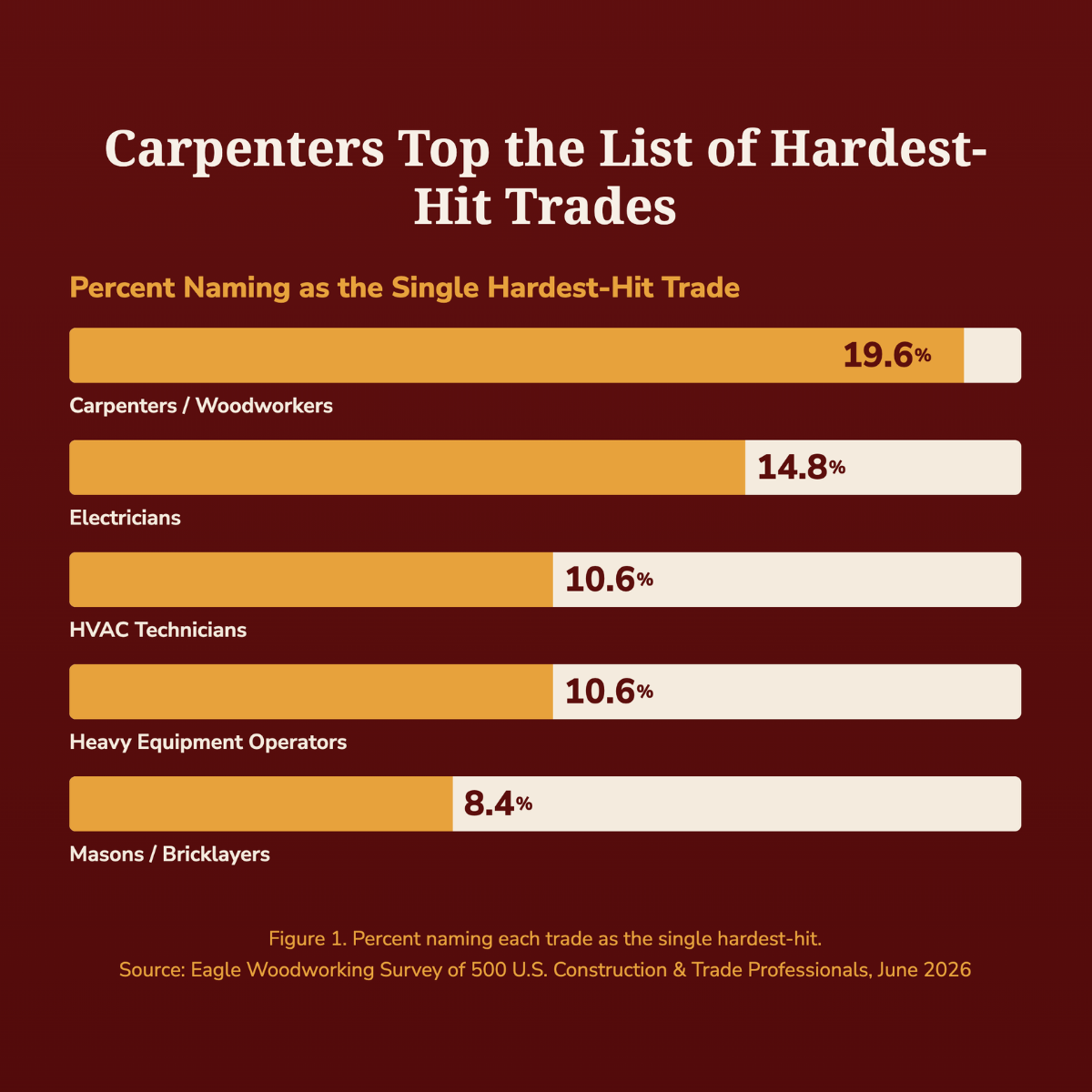
Carpenters and woodworkers were named the most-exposed trade no matter how we asked. They led the field of trades expected to feel the shortage (47%) and topped the list when respondents had to pick a single hardest-hit trade (19.6%). The view held across contractors, tradespeople, and project managers alike.
2. Craftsmanship Is the First Thing to Slip
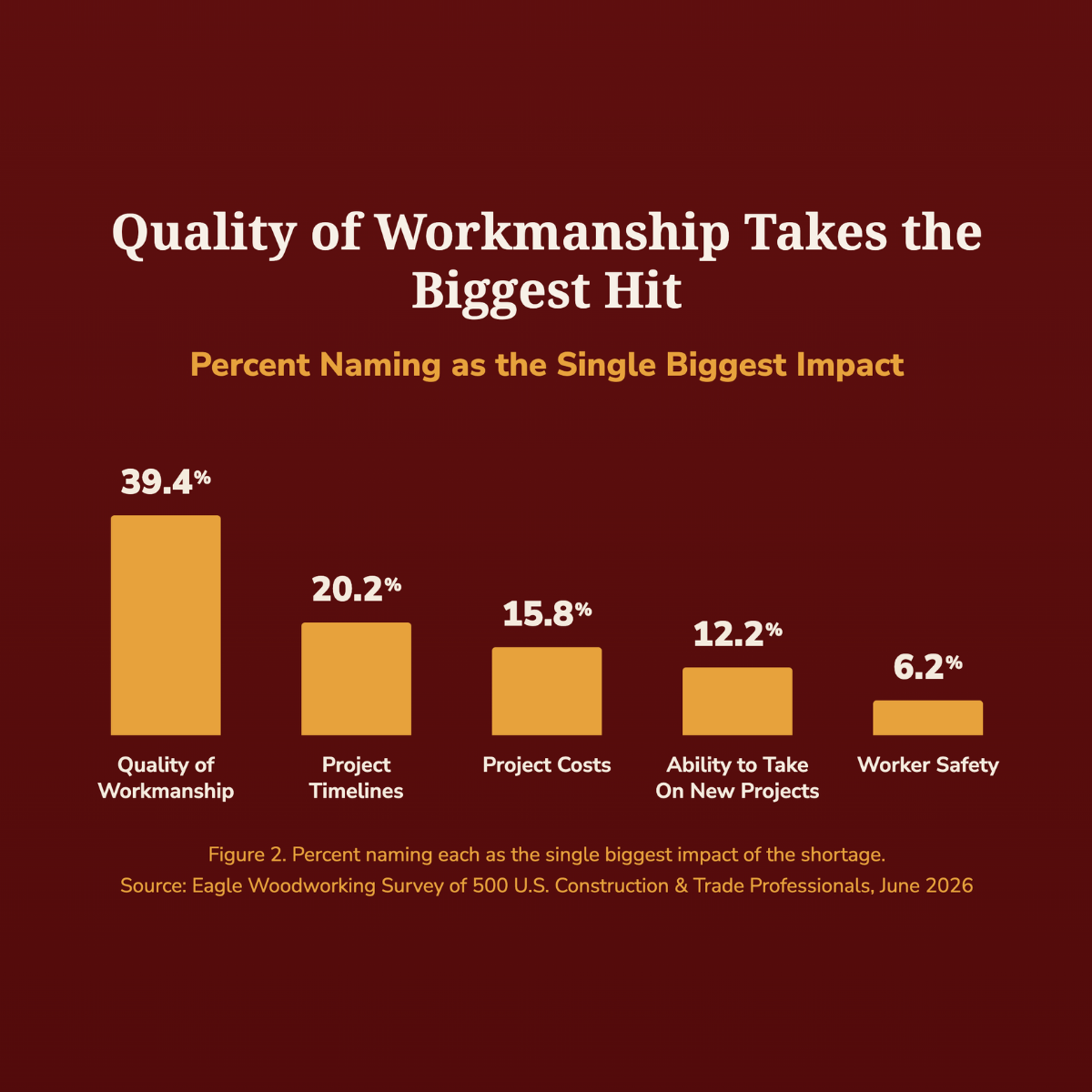
Asked what the shortage hurts most, respondents didn't lead with cost or schedule. They named quality of workmanship, the single biggest impact for 39.4%, nearly double the share that pointed to timelines. Because the scarcest workers are the most experienced ones, craft is what thins out first.
3. The Shortage Is Already Capping Output
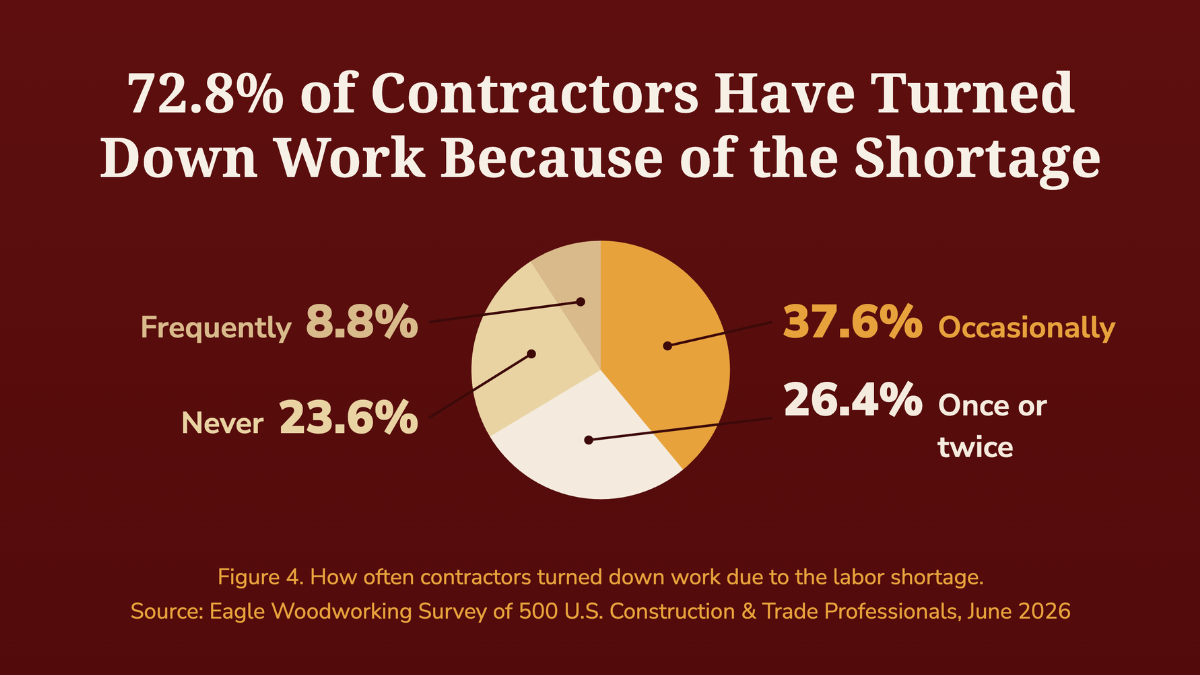
Nearly three-quarters of respondents (72.8%) have turned down work because they couldn't staff it. The jobs that do get done cost more and run longer for the overwhelming majority, and the people who plan and own projects are the ones walking away most often.
4. The Cause Is Demographic, but the Fix Everyone Names Is Pay
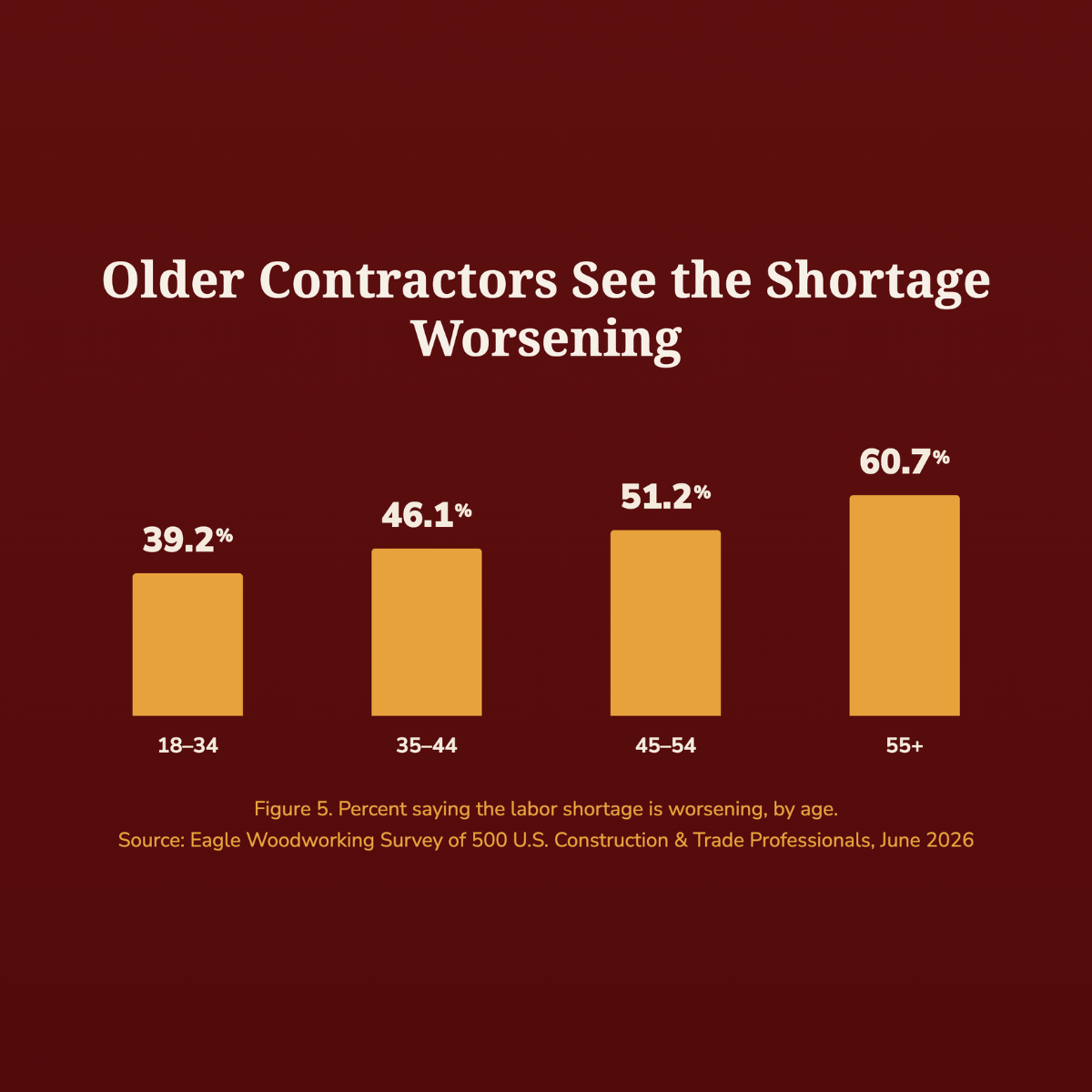
Respondents blame a thinning pipeline, fewer young people entering the trades and an aging workforce heading for the door, far more than low wages. Yet asked for the single best fix, they reach for pay first. And the closer a worker is to retirement, the more pessimistic they are about what comes next.
What This Means for Builders and Remodelers
The shortage is an experience problem before it's a numbers problem, and craftsmanship is the variable most likely to give. For anyone building or remodeling, that turns a sourcing question into a quality question: where the finished woodwork comes from matters more, not less.
Woodworking at the Center of the Shortage
Carpenters and Woodworkers Were Named the Trade Most Exposed to the Skills Shortage, by a Clear Margin
Across both ways we asked, woodworking came out on top. When respondents could flag every trade they expect the shortage to affect, carpenters and woodworkers led at 47%, ahead of electricians at 41% and plumbers at 37%. Forced down to a single choice, they picked woodworking again at just under 20%, with cabinet makers and millworkers, the same craft under a different name, adding another 4% on top.
This isn't a trade talking up its own importance. The pattern held no matter who was answering. Among contractors, ~19% named carpenters and woodworkers as hardest hit; among tradespeople, 20%; among project and site managers, ~25%. The people running the jobs and the people doing them agreed. The trade that produces the surfaces a client actually sees and touches is the one the industry expects to lose the most ground.
The scale of the broader squeeze backs them up. Construction needs to attract an estimated 349,000 net new workers in 2026 just to keep labor supply and demand in balance, a figure that climbs to roughly 456,000 in 2027 (Associated Builders and Contractors, Jan. 2026).
Craftsmanship Is the First Casualty, Not Cost or Schedule
Quality of Workmanship Was the No. 1 Impact of the Shortage, Named the Single Biggest by ~39%
Most coverage treats the labor shortage as a story about delays and budgets. Our respondents told a different one. When they had to name the single biggest impact of the shortage, quality of workmanship ran away with it at 39.4%, close to double the share that named project timelines and more than double the share worried about cost.
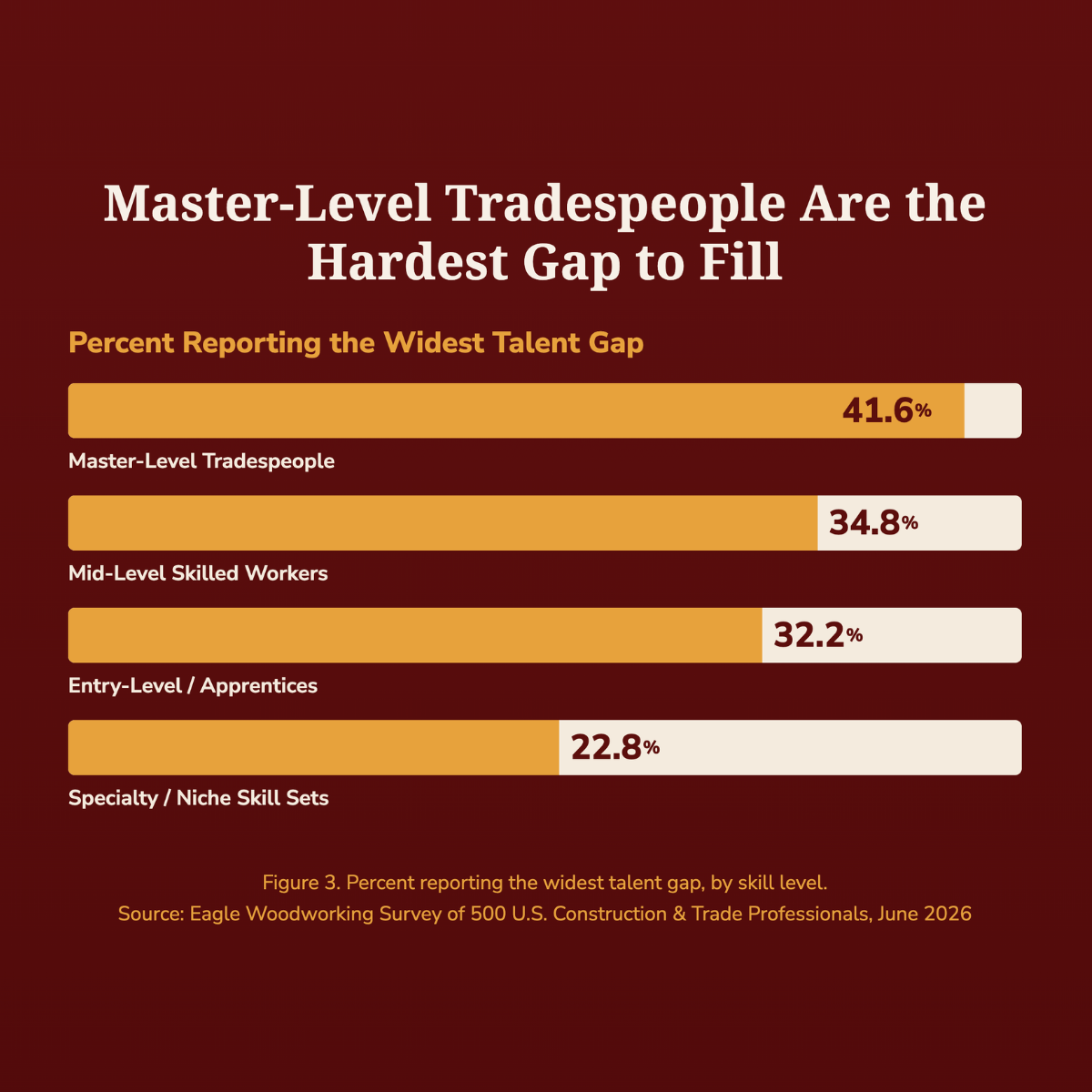
The reason sits one layer down, in where the gap actually falls. The hardest workers to find aren't the entry-level ones. They're the master-level tradespeople at the top of the ladder, named by 41.6% of respondents as the scarcest group, ahead of both mid-level and apprentice-level workers. When the people in shortest supply are the most experienced, the knowledge that separates good work from merely acceptable work is the first thing to leave with them.
That's a pointed finding for a market that sells on craft. The survey doesn't just say the trades are short-handed. It says the part of the work that's hardest to fake, the finish, the fit, the detail, is exactly the part most exposed.
The Shortage Is Already Capping Output
Nearly 3 in 4 Contractors Have Turned Down Work They Couldn't Staff
The shortage has moved past inconvenience and started costing real revenue. Almost three-quarters of respondents (73%) have turned down work because they couldn't find the skilled labor to do it, and close to half do it frequently or occasionally rather than as a one-off.
The jobs that do go ahead carry a penalty on both sides of the ledger. More than eight in ten respondents say the shortage has pushed their costs up, and for a sizable share those increases run past 10%. A similar majority report projects taking longer, with most losing a week or more and better than a third losing three weeks or more.
Tellingly, the people most likely to walk away from work are the ones who plan and own it. Among builders and developers, 83% have turned down a job they couldn't staff, as have 79% of project and site managers, both higher than the rates for contractors or tradespeople. The same squeeze shows up in our 2026 contractor outlook, where small firms reported hiring difficulty at nearly double the rate of larger ones. When the people deciding which jobs to take are routinely saying no, the shortage has become a ceiling on how much the industry can build at all.
A Pipeline Problem, and a Pay Paradox
Contractors Blame the Shortage on a Thinning Pipeline, Then Reach for Pay to Fix It
Ask what's causing the shortage and the answers point to demographics more than dollars. Fewer young people entering the trades was the most-cited cause at 59%, followed by an aging, retiring workforce at 45.6%. Low starting wages came in well down the list. The picture respondents paint is a generational one: the trade is losing its veterans faster than it's bringing in replacements.
Then comes the contradiction. Asked for the single most effective fix, the same respondents reached for pay first. Raising starting salaries topped the list at 29%, ahead of earlier exposure in schools, more apprenticeships, or better trade-school training. They don't mainly blame low pay for the problem, but pay is the lever they grab to solve it, and a money fix for a demographic problem may not pull as hard as they hope.
The aging-out worry isn't just sentiment. Most of the new-worker demand projected for 2026 traces to retirement rather than fresh construction activity (Associated Builders and Contractors, Jan. 2026). And the anxiety climbs right alongside experience. Among the youngest respondents (18-34), 39.2% think the shortage is getting worse; that share rises through every age band to 60.7% of those 55 and older. The workers closest to retirement, the master-level talent already in shortest supply, are the most worried about who's coming up behind them.
What It Means for Builders and Remodelers
Our survey ultimately finds that woodworking is the trade most exposed to the skills shortage, and the first thing the shortage takes is the quality of the work, because the workers in shortest supply are the most experienced ones.
For builders and remodelers, that quietly turns a sourcing decision into a quality decision. As skilled woodworking talent gets scarcer and craft becomes the first thing to slip, where the finished, visible woodwork comes from matters more, not less. The pieces that carry that finish, the doors, the drawer fronts, the drawer boxes, are the hardest to keep consistent on a stretched crew and among the easiest to lock down by ordering them, built to spec, from a shop that still makes them with care. It's the model specialists like Eagle Woodworking have run since 1980, building cabinet doors and dovetail drawers with a high degree of precision and shipping them on a tight schedule.
None of that changes the trend the data describes. The pipeline is thin, the most experienced hands are the scarcest, and craft is the first thing to give. For the pros who keep winning work through it, the edge won't be cheaper labor. It'll be deciding, deliberately, where the craftsmanship in a build comes from.
Survey Details
- Data source: Pollfish survey platform
- Total sample size: 500 respondents
- Target audience: U.S. construction and trades professionals, screened by role
- Collection period: June 16, 2026 (single-day field)
Sample composition by role:
- Contractors / general contractors: 55.0% (275)
- Tradespeople (carpenter, electrician, plumber, HVAC, and others): 25.6% (128)
- Project managers / site managers: 12.2% (61)
- Builders / developers: 7.2% (36)
Analysis note: Percentages for "select all that apply" questions are reported as a share of all 500 respondents and sum to more than 100%. Single-answer questions sum to 100% across the answer set. Figures use unweighted raw counts; Pollfish also provides census-stratified weights, which shift individual values by roughly 1-3 points without changing the rank order of any headline finding.
About Eagle Woodworking
Eagle Woodworking offers custom cabinet doors and dovetail drawers with 1-2 week lead times to help keep your project on track. Your clients will love our handcrafted products made with high-quality materials. We also offer custom drawer inserts and hardware options for clients who want to upgrade their kitchen without the high cost and lengthy timeline of a full remodel.