

The remodel reality gap: Homeowners' expectations vs. what contractors can deliver in 2026
In a new survey conducted by Eagle Woodworking, respondents were asked about their remodeling plans for the upcoming year. Their answers to questions about timeline, budgets, and sustainability reveal a significant disconnect between homeowner expectations and remodeling realities. To avoid miscommunication and dissatisfaction, it’s important for contractors to understand the expectation gap and prepare to navigate it in the year ahead.
Key Takeaways
- Kitchen remodels take longer than homeowners expect. Nearly three-quarters of homeowners said they expect it to take 4 weeks or less, but it typically takes between 3 and 5 months.
- Homeowners underestimate the cost of remodeling projects. Even minor kitchen remodels cost over $27,000, but 42% of homeowners expect to pay less than $20,000.
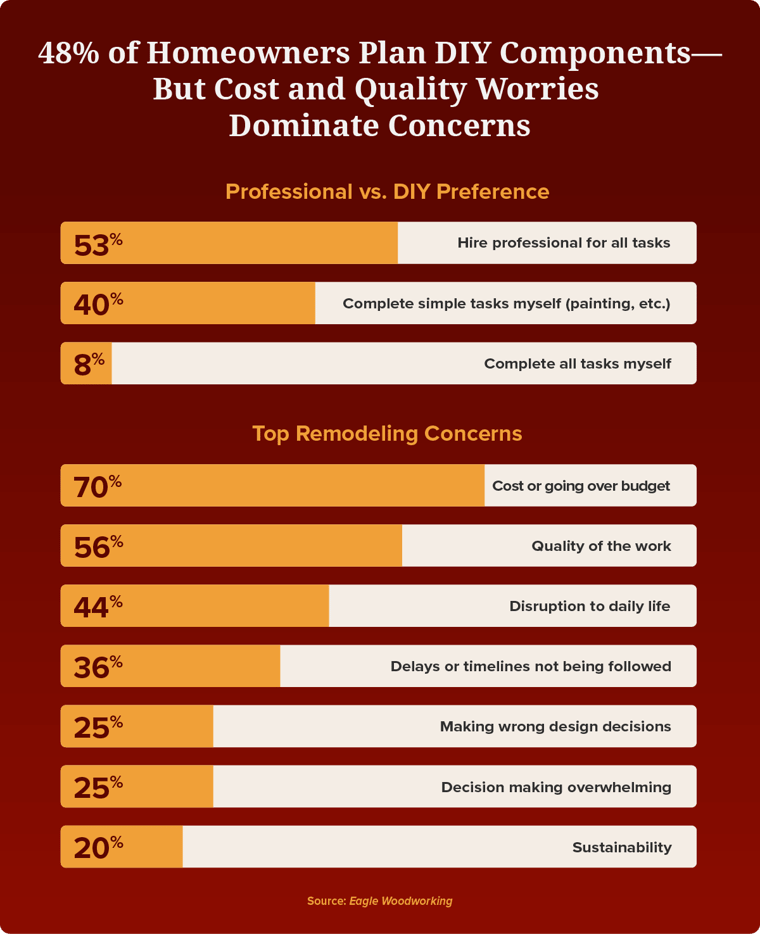
- Sustainability and smart features are an expectation, though they may not fit in the budget. Nearly 90% rate sustainability as important and want to incorporate at least one smart home feature, but 70% of respondents cited costs and their budget as a top concern.
The Timeline Disconnect for Renovations
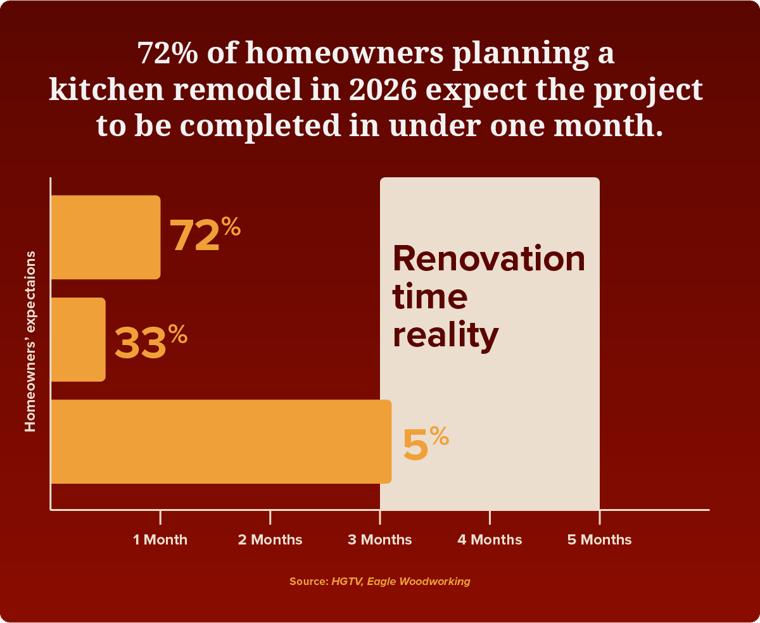
When asked about the ideal timeframes for a complete kitchen remodel—from design through the removal of the old kitchen to the installation of the new one—nearly three-quarters of homeowners said that the ideal timeline is less than 4 weeks. Surprisingly, only 5% said they expected it to take more than three months, while one in three homeowners thinks it will take less than two weeks. According to HGTV, the reality is that full kitchen renovations take 3 to 5 months or more, depending on the complexity of the design and appliances.
How contractors can navigate the expectation gap: This timeline expectation gap reveals a significant risk of miscommunication, presenting a challenge for contractors and remodelers. To contend with this, it’s crucial to manage client expectations upfront. Creating a clear project timeline, complete with project phases and realistic milestones, is essential to maintaining trust and satisfaction throughout the process.
The Budget-Value Paradox
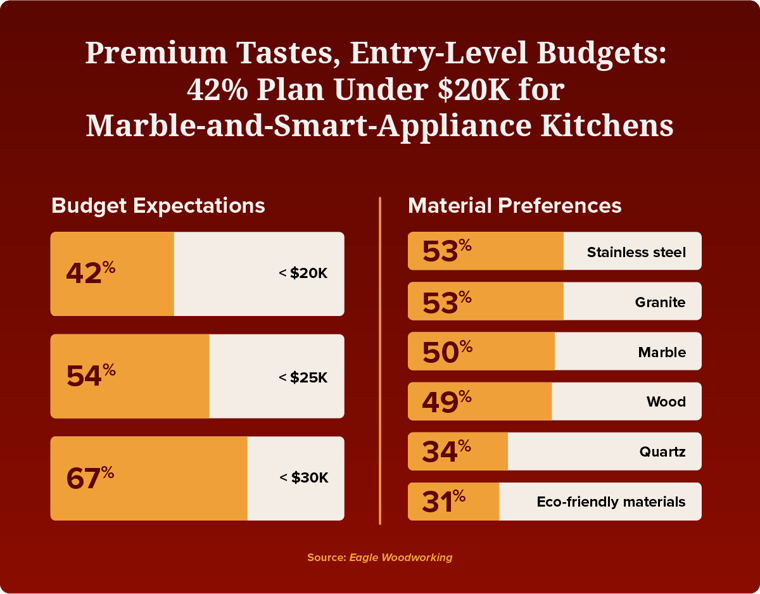
Another area where expectations don’t quite match reality is the budget-value paradox. Today’s homeowners want premium materials like marble, granite, and stainless steel as well as integrated smart features. What they don’t account for realistically, however, is the cost.
When asked about remodeling budget, 42% expect to pay under $20,000, while data from Zonda’s 2024 Cost vs Value report shows that even minor kitchen remodels cost over $27,000. Larger remodels cost up to $80,000—four times the amount that many homeowners expect. Homeowners with premium tastes but entry-level budgets may be surprised to find that they haven’t budgeted enough for the remodel they’re dreaming of.
How contractors can navigate the expectation gap: Contractors should expect to have difficult conversations about the impact of tariffs on renovations and trade-offs that will let homeowners get the things they value most while cutting other plans to stay within their budget. For instance, suggesting kitchen cabinet refacing instead of a full cabinet replacement to refresh the kitchen while staying within budget. This gives homeowners options and shows that you care about their project.
Sustainability as a Non-Negotiable
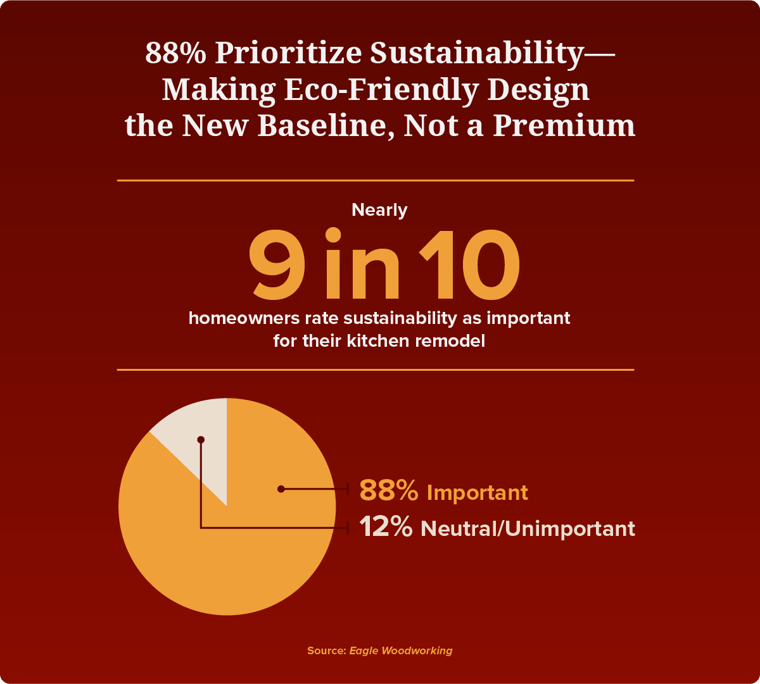
Another area where expectations and reality just aren’t lining up is homeowners’ desire for sustainability. Eco-friendly designs have become the new baseline, but they’re still coming with premium price tags. Nearly 9 in 10 homeowners rate sustainability as important for their kitchen remodel. They want durable materials, energy-efficient appliances, and eco-friendly designs, but 70% of respondents cited budget constraints as their top concern. Because homeowners are expecting sustainability to be the standard, they may be surprised when presented with additional costs associated with sustainable upgrades.
How contractors can navigate the expectation gap: This provides an opportunity for contractors to ask their clients about their priorities and develop a plan that balances sustainability with their budget. Contractors who can deliver energy-efficient, durable solutions within their clients’ budgets will have the advantage in these situations.
The Smart Kitchen Surge
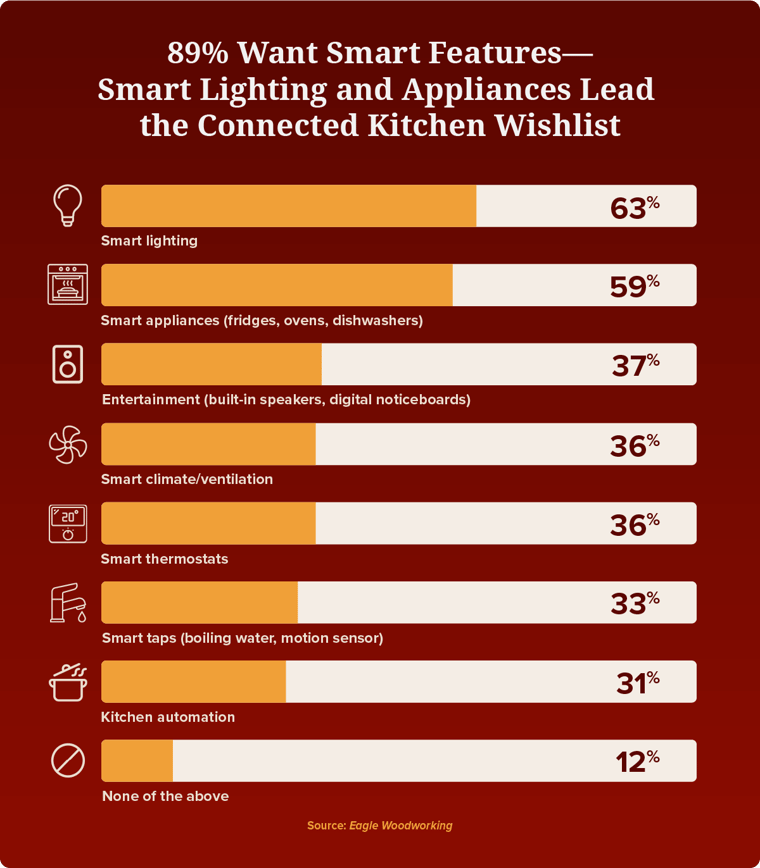
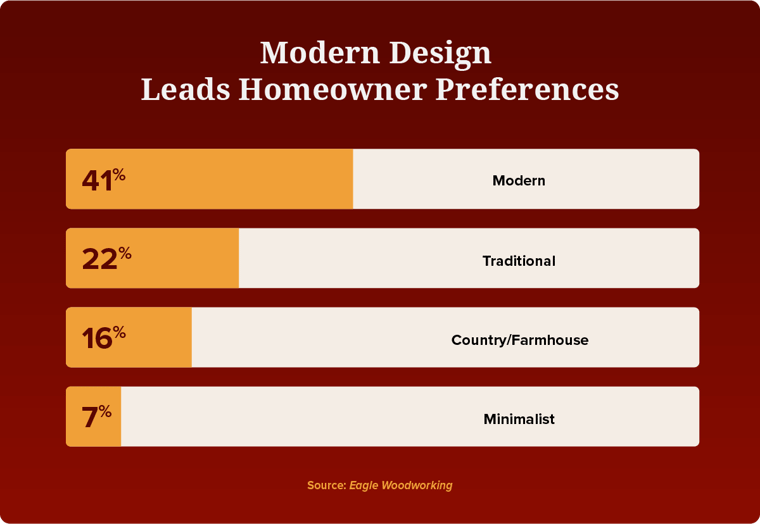
Our survey found that 89% of homeowners want at least one smart feature in their kitchen, with lighting and appliances topping their wishlists. With this in mind, contractors who understand the necessity of technology integration will have a competitive advantage. According to our survey, 41% of homeowners preferred a modern design, which further supports the trend towards technology integration.
How contractors can navigate the expectation gap: As you’re developing quotes for kitchen remodeling projects, build in the cost of smart-ready infrastructure, so there are no surprises for the client as far as cost is concerned.
The DIY Factor and Top Concerns
Nearly half of the homeowners surveyed plan to tackle at least some of the remodeling work on their own. These tasks are usually simple things, like painting or installing trim, but cost remains the dominant concern for over 70% of homeowners.
How contractors can navigate the expectation gap: Finding the balance between contractor-completed work and what the homeowners plan to DIY means they’ll get the most out of their budget and help you avoid any miscommunication over who is responsible for what. Offering a hybrid package with tasks clearly split between the owner and the contractor can help the budget-conscious get their dream kitchen while sticking to their budget.
Here’s How to Navigate the Expectation Gap
Homeowners in 2026 want a modern, sustainable, smart-enabled kitchen, but their expectations just don’t line up with reality. To mitigate this risk, contractors who understand the expectation gap already have an advantage. Managing this expectation gap through education, transparent pricing, and creative value engineering will separate the successful contractors from those buried under unrealistic expectations, disputes, and negative reviews.
When you meet with your clients, proactively address timeline and budget realities in the initial consultation. Use industry benchmarks and estimates to set realistic expectations, and only then should you begin scope and design discussions. The more upfront and honest you are about the realities of 2026 kitchen remodeling timelines and budgets, the better you can manage your client’s expectations and complete the project successfully.
About Eagle Woodworking
Eagle Woodworking offers custom cabinet doors and dovetail drawers with 1-2 week lead times to help keep your project on track. Your clients will love our handcrafted products made with high-quality materials. We also offer custom drawer inserts and hardware options for clients who want to upgrade their kitchen without the high cost and lengthy timeline of a full remodel.

Survey Methodology
- Data source: Pollfish survey platform
- Total sample size: 600 respondents
- Target audience: U.S. homeowners planning home improvements in 2026
- Screening criteria: All respondents confirmed they are planning home improvements in 2026 (100% qualification rate)
Rooms Being Considered for Remodel:
- Bathroom: 62.7% (376 respondents)
- Kitchen: 60.0% (360 respondents)
- Living room/family room: 36.8% (221 respondents)
- Bedrooms: 30.5% (183 respondents)
- Dining room: 21.8% (131 respondents)
- Whole house: 7.2% (43 respondents)
Inspiration Sources:
- Friends and family: 58.0% (348 respondents)
- Pinterest: 46.0% (276 respondents)
- Instagram: 45.3% (272 respondents)
- Magazines: 42.8% (257 respondents)
- TikTok: 32.8% (197 respondents)
Analysis Note: Survey questions about kitchen-specific expectations were shown to all 600 respondents, not filtered to only those planning kitchen remodels. Results reflect broad homeowner sentiment about kitchen remodeling expectations.