

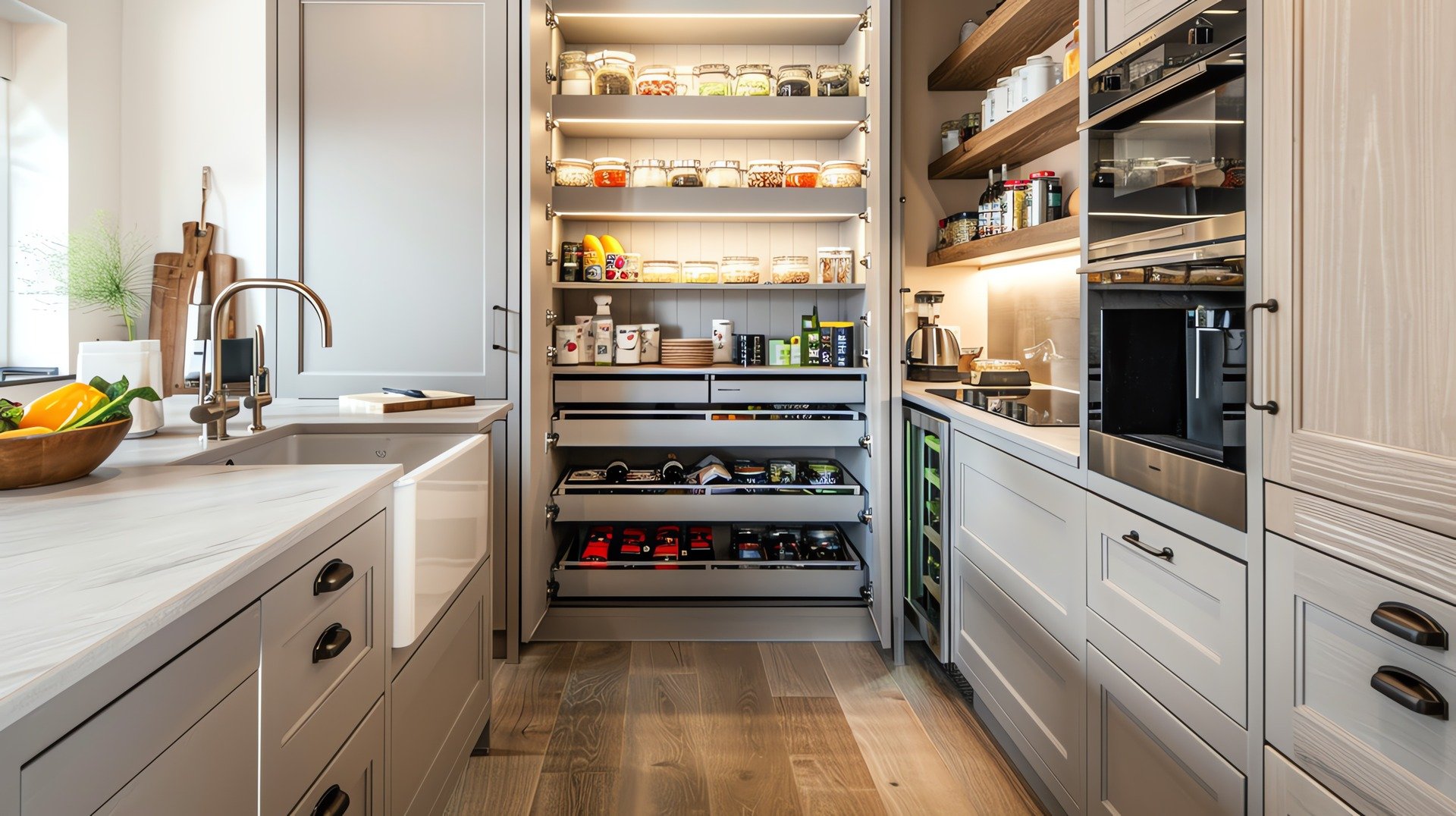
Pantry cabinets take advantage of vertical space to create additional storage for the kitchen. They are available in a range of styles and materials and can incorporate different organizational features. Choosing the right pantry cabinet doors impacts not only the overall kitchen design, but also how efficiently the pantry functions and how easily drawers, pull-outs, and accessories operate.

In this article:
- What is a Pantry Cabinet?
- Types of Pantry Cabinets
- Popular Pantry Cabinet Door Styles
- Materials and Construction Methods
- Functional Organization Features
- Choosing the Right Pantry Cabinet
- Comparing Stock vs. Custom Pantry Cabinet Doors
- Designing Your Ideal Pantry Door Setup
- Frequently Asked Questions
What is a Pantry Cabinet?
Before we take a closer look at the types of pantry cabinets available, it’s important to understand what exactly a pantry cabinet is and how it differs from standard cabinetry and walk-in pantry spaces.
Definition and Basic Function
A pantry cabinet is a full-height cabinet designed to maximize vertical storage. Standard heights typically range from 84 to 96 inches, compared to a base cabinet’s 34½-inch height.
While commonly used for dry goods, snacks, and canned items, pantry cabinets can also be configured to store small appliances, cleaning supplies, or specialty kitchen items. The interior layout of a pantry cabinet can include drawers, shelving, pull-outs, or open vertical storage for brooms and tall items.
Pantry Cabinet vs Walk-In Pantry
A pantry cabinet is a standalone cabinet that can be integrated into the overall kitchen layout or installed inside a walk-in pantry.
A walk-in pantry, by contrast, is a dedicated room for food and kitchen storage. Some are compact closet-style spaces, while others include extensive shelving, countertops, and even sinks for prep work. In many homes, a well-designed pantry cabinet offers the storage efficiency of a walk-in pantry without requiring additional square footage.
Common Locations in the Home
Pantry cabinets are most commonly installed in the kitchen as a way to incorporate additional storage. However, their full-height design makes them a practical solution in several areas of the home:
- Walk-in pantries
- Laundry rooms
- Mud rooms
- Bathrooms
Types of Pantry Cabinets
Pantry cabinets serve the same function—to add storage where it’s needed. For maximum access, concealed hinges on pantry cabinet doors are commonly 110-degree hinges, allowing easy access to shelving and unobstructed drawer use. There are, however, different types of pantry cabinets that are suited to different layouts and storage needs.
Freestanding pantry cabinets
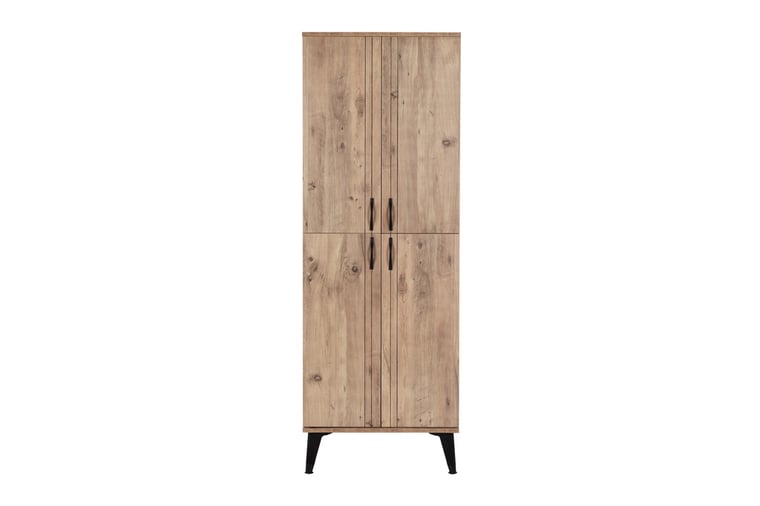
Freestanding pantry cabinets can be installed where you need them and aren’t integrated into the other cabinets. Even though freestanding cabinets exist separately from the rest of the cabinets, it’s important to ensure it feels integrated with the overall kitchen design rather than appearing as a standalone add-on. You can do this by choosing a complementary color and the same door and hardware styles.
Built-in pantry cabinets
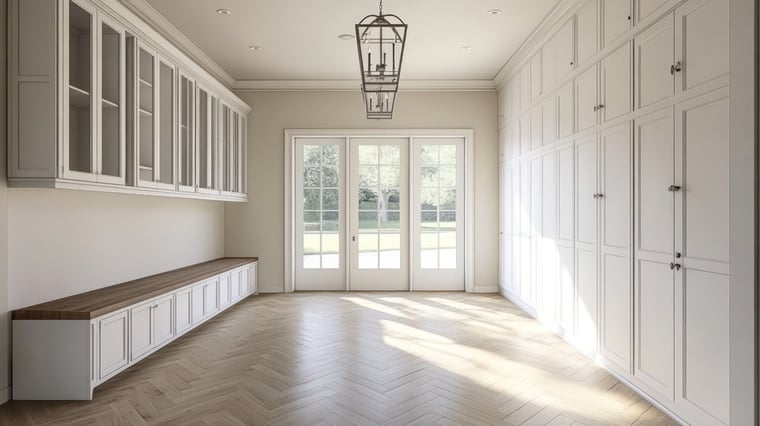
Built-in pantry cabinets are integrated into the rest of the cabinets to create a cohesive look throughout the kitchen.
Pull out and slide out pantries
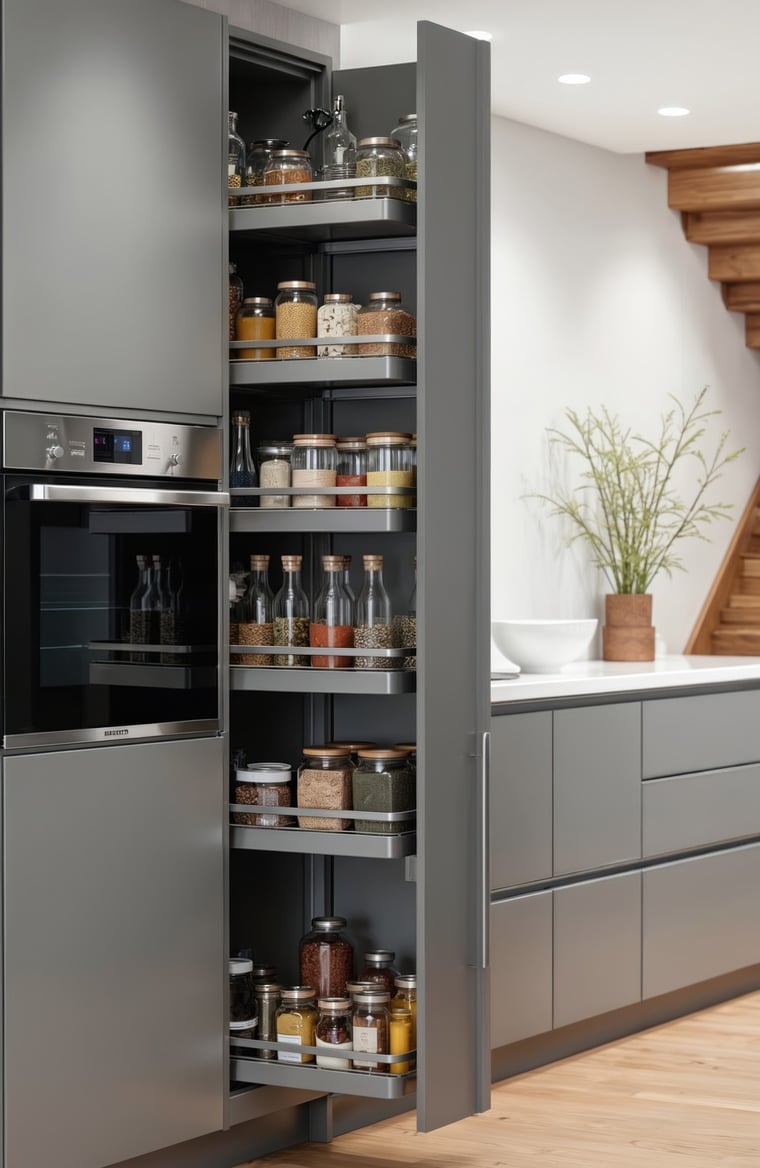
Pull-out and slide-out pantries are narrow and well suited to small spaces. The shelves extend fully from the cabinet, improving visibility and access to items stored toward the back.
Corner pantry cabinets
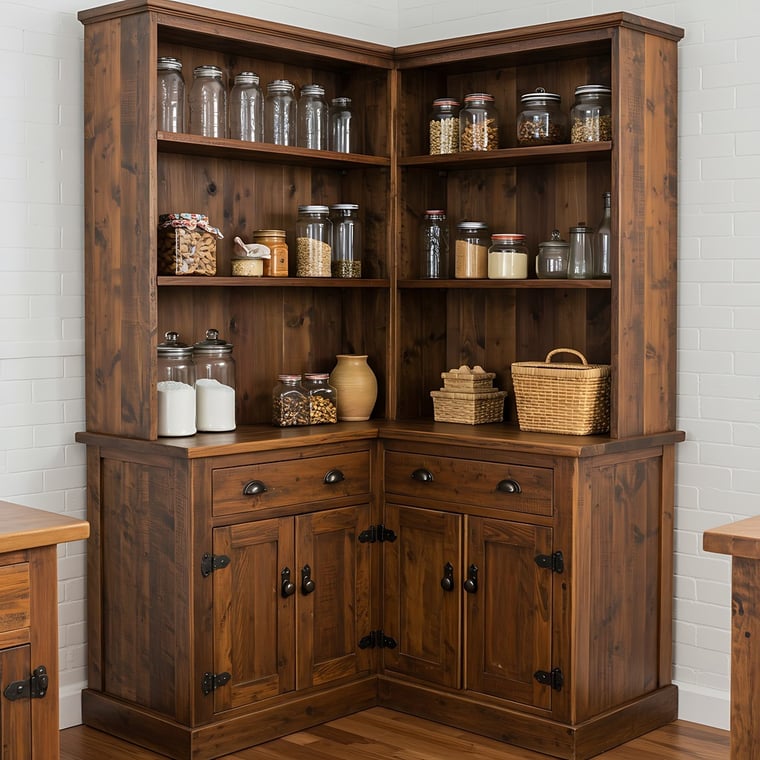
Corner pantry cabinets are designed to fit into the corner of a room. The side panels meet in a 90-degree angle, while the front remains accessible. This is a practical way to make use of an awkward or unused corner.
Butler pantry cabinets
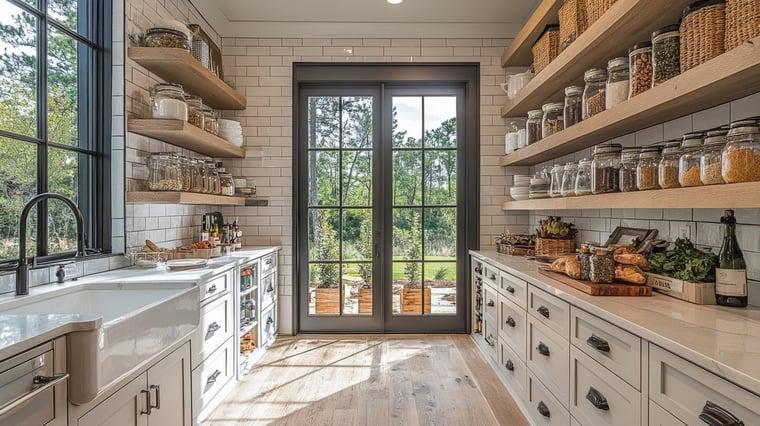
A butler’s pantry is a small room, typically located just off the kitchen or dining room. It’s meant to be more functional than a standard pantry and can be used for food prep in addition to storage. Because of this, it usually features a countertop and possibly a sink in addition to standard cabinets and shelves. Pantry cabinets can be integrated into a butler’s pantry for additional storage for food,snacks, small appliances, and dishware, while maintaining a cohesive cabinet layout.
Popular Pantry Cabinet Door Styles
Pantry cabinet doors are available in several styles, each offering a different balance of durability, maintenance, and design flexibility.
Shaker Pantry Doors
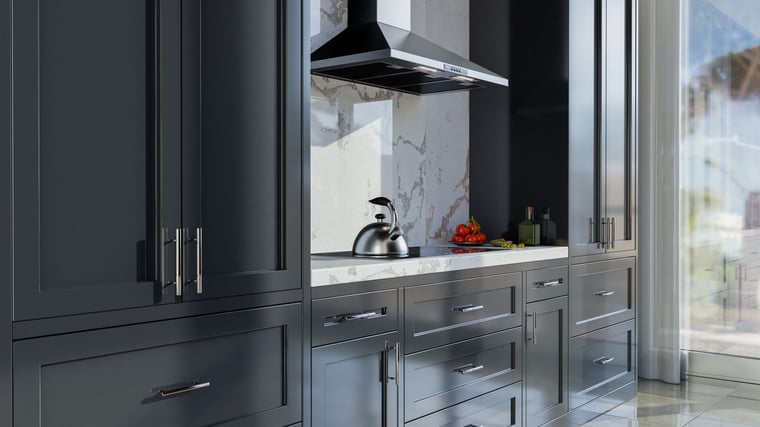
Shaker pantry doors are a traditional choice that also works well in modern kitchens due to their clean lines and minimal embellishment. They’re constructed with a recessed panel and a framed edge, providing both structural stability and timeless appeal.
Flat-Panel Pantry Doors
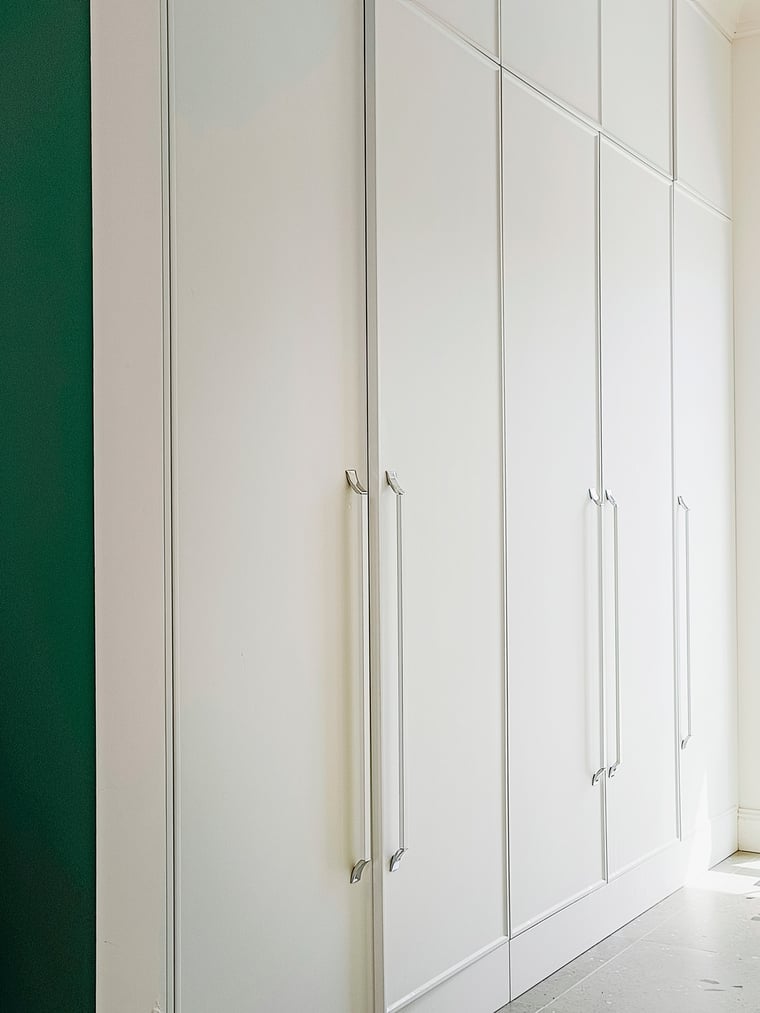
Flat-panel pantry doors offer a minimalist look with easy maintenance since there aren’t any edges or grooves to clean. These are a great fit for contemporary designs that focus on clean lines and simplicity.
Louvered and Glass-Front Options
Louvered:
Glass:
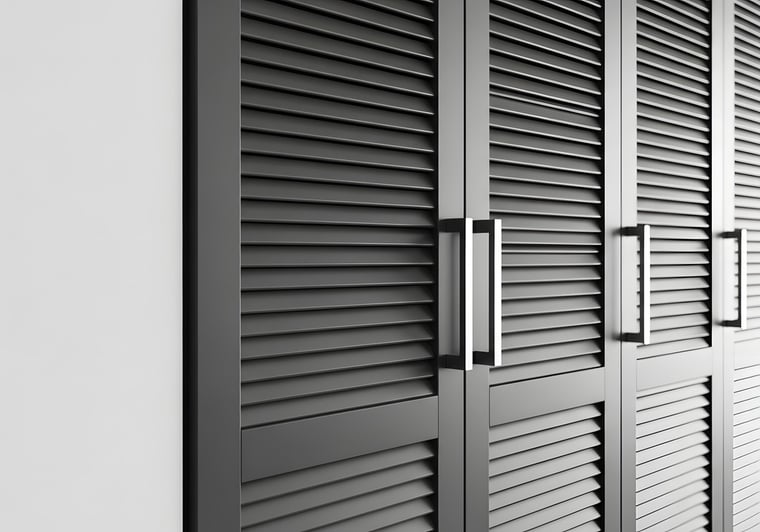
Featuring horizontal slats, louvered cabinet doors offer ventilation, making them a functional and aesthetic fit for pantry cabinets. They also provide privacy, so they’re a good choice when you don’t want items on display but desire an added design touch.
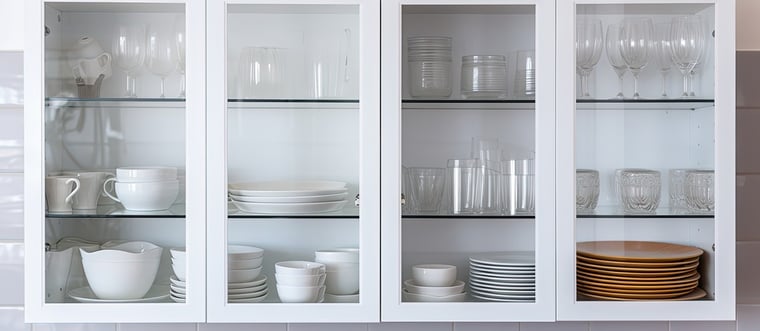
Glass-front options are ideal for pantry cabinets that store decorative items or dishware. This option protects the cabinet interior while allowing items to remain visible, making it a strong choice for display-focused pantry storage.
Materials and Construction Methods
Different materials work best in different situations. Common materials for pantry cabinet doors are solid hardwood and MDF. Both of these materials are durable enough to handle constant use, though there are differences in their final look, lifespan, and cost. Depending on the manufacturer, lead time may also vary based on the material you choose.
Solid Hardwood Construction
Cabinets made of solid hardwood offer superior strength and long-term wear resistance. The wood grain pattern and undertones of different hardwood species affect the final look, and understanding the differences will help you make the best choice for your pantry cabinet doors.
For example:
- Maple: Smooth, even grain; lighter tone that takes stain and paint well.
- Red Oak: Red undertones and strong, open grain; looks great stained and holds up well in high-use spaces.
- Walnut: Darker tone that enhances high-end cabinetry designs.
Solid hardwood cabinet construction is a durable option and is ideal for high-use pantry cabinet doors. Hardwood is more expensive than MDF, but these cabinet doors can last for 50 years or more, and can often be repaired or refinished over time.
MDF and Veneer Options
MDF (medium-density fiberboard) is manufactured by pressing wood fibers and resin into a flat, strong sheet used to construct cabinets and furniture. MDF cabinet doors have a smooth surface that takes paint well, making it a common choice for paint-grade doors.
Veneer is a thin layer of wood that’s bonded to a substrate like MDF or plywood to create the look of natural wood but without the cost.
Both MDF and veneer are suitable for pantry cabinet doors and are cost-effective alternatives to solid wood because they’re man-made products. However, neither material is as durable as solid wood and won’t last as long—typically up to 20 years, depending on use and environment. Today, most cabinet doors will pair hardwood frames with either a MDF center panel for painted doors or a veneer center panel for stain-grade doors. This allows the door to maintain the strength of the hardwood frame while preventing warping and cracking over time from wood expansion in the center panel.
Functional Organization Features
One of the biggest advantages of pantry cabinet doors is the ability to integrate organization features that match the way the space is actually used, improving both access and efficiency.
Interior Customization
From installing lazy Susans and pull-out drawers to incorporating door mounted shelves and labeled baskets, the options for interior pantry cabinet customization are nearly endless. Adjustable shelving allows you to customize the layout to fit your storage needs, and door mounted racks and spice organizers add even more storage space, maximizing vertical capacity.
Door Dimensions and Hinges
The size of the cabinet and amount of storage you need will also impact the door dimensions and number of hinges necessary to support the door. A pair of standard hinges can support doors up to 20 lbs, but a pantry cabinet may need more support, especially if you install door mounted storage options. Custom door dimensions allow you to build a cabinet suited to your space while maintaining proper clearance for drawers, pull-outs, and interior accessories.
Organization Methods
Pantry cabinets are larger than standard cabinets, so functional organization is key to getting the most out of the additional storage. Pantry cabinet organization ideas include using baskets, bins, and containers with clear labels to find items quickly. Lower shelving or custom cabinet drawers are great places to store appliances you don’t use often or to create a “kid station” where snacks are easily accessible.
Choosing the Right Pantry Cabinet
When you’re choosing a pantry cabinet, look for one that addresses your storage needs and matches the existing cabinets and decor. It should also fit into your budget and be accessible to those who will use it.
Assessing storage needs
Because pantry cabinets meet a wide range of storage needs, assessing what they will be used for is an early step in the decision process. Some homeowners use pantry cabinets to store dry goods, snacks, and canned foods while others use them for dishes or small appliances. Customization options like pull-out pantry drawers and door-mounted spice racks ensure the cabinet is a functional addition to the kitchen design.
Matching existing cabinets and decor
Whether you’re installing a pantry cabinet as a built-in unit with the rest of the kitchen or as a freestanding unit to add storage, matching the existing cabinets and decor allows it to seamlessly blend into the kitchen. Kitchen pantry doors styles include minimal slab doors, recessed panel doors, and shaker pantry doors. Choosing a style that fits the home’s aesthetic makes the cabinet feel like it’s part of the kitchen rather than an afterthought.
Balancing budget and quality
Budget is commonly at the forefront of design decisions, and pantry cabinets are no different. Review your available budget and ensure the cabinet size, style, shelving, drawers, and finishes fit within it. Balancing budget and quality is crucial when choosing pantry cabinet doors.
Accessibility and universal design
As you plan for a pantry cabinet, consider who will be using it. Making sure it includes handles that are easy to grasp and includes storage at all levels makes it accessible to children, older adults, and those with mobility issues now and in the future.
Comparing Stock vs. Custom Pantry Cabinet Doors
Stock pantry cabinet doors come in standard sizes and work well for standard kitchen designs but have limited style options and often come in predetermined stain and paint colors. They’re often manufactured with engineered wood, MDF, or low-grade wood rather than high-quality hardwood. Because they’re prebuilt, they’re available quickly, which can be a bonus for quick projects.
Custom doors are built to spec, so they fit any pantry cabinet perfectly, regardless of the dimensions. High-quality materials create long-lasting pantry cabinet doors that can stand up to constant use in your client’s homes.
Designing Your Ideal Pantry Door Setup
Designing the ideal pantry door setup that aligns with the needs of your client makes it easier for them to access food, snacks, spices, or any number of kitchen items stored within the space.
At Eagle Woodworking, we offer custom dovetail drawers and cabinet doors for the trades — built to spec, delivered fast, and easy to order. Our customization options and quick lead times can fit into any custom pantry project. All you have to do is take accurate measurements of the pantry cabinet and enter them into our easy-to-use order form. On the form, you’ll also specify the door style, wood type, hinge configuration, and finish options. If you have special order requests, you can enter them in the ‘Notes’ section.
Each order is constructed to your exact specifications and shipped quickly to keep your project moving.
Frequently Asked Questions
What is the typical lead time for custom pantry cabinet doors?
At Eagle Woodworking, we offer standard 1–2 week lead times. After you fill out our easy to use order form, production begins promptly, allowing you to move forward with your project without delay. To facilitate the process, make sure your measurements are correct, and include any necessary details in the notes section. In-stock hardwoods ship within the standard window, while specialty materials may extend lead times.
How do I choose the right wood species for pantry doors?
To choose the right wood species, consider the space, finish, and the level of use the pantry cabinet will see. For high-use spaces, red oak is a particularly durable choice. High-end designs often benefit from the rich tones of white oak while maple is a great choice for either painted finishes. For kitchen and bathroom cabinets that are exposed to moisture, proper painting or staining improves moisture resistance and durability.
Can I incorporate glass inserts in my pantry cabinet doors?
You can incorporate glass inserts into your pantry cabinet doors as a way to display their contents. This is a good choice if you’re storing dishes or decorative items. If you want to keep the contents of the pantry cabinet private, then standard doors are a better choice. Glass doors often feature mullions to create smaller glass tiles, and you can choose the number of panes that appear on the door.
What maintenance do pantry cabinet doors require?
Pantry cabinet doors don’t require much maintenance, but you can do a few things to preserve their appearance and function over the years. Clean wood cabinets with a wood cleaner and cloth or a mix of mild soap and water. Clean painted cabinets with water and dish soap. Cabinets should be dusted or wiped down once every two weeks with deeper cleanings to remove grease or dirt as needed.
Which organization accessories work best with specific door styles?
Most organization accessories work well with pantry cabinet door styles. If you choose to use a door-mounted spice or storage rack, make sure the shelves are slightly narrower to allow for the added depth of the door rack and that the hinges are strong enough to hold the additional weight. Pull-out drawers and swing-out trays also work well in pantry cabinets because they are hidden behind the doors and only visible when it’s time to use them. The most important thing is to plan for enough clearance between the hinges and any organization accessories, making sure that the doors can open enough to operate them.