
At some point, nearly every cabinet shop that wants to scale faces the same question: should we keep making this ourselves, or should we outsource it?
For many shops, the default answer is to build everything in-house because it provides greater control over quality, scheduling, and production. But as workload increases, labor becomes harder to find, and lead times become more difficult to manage, that approach can start creating bottlenecks.
The goal isn't to manufacture every component yourself. The goal is to deliver profitable projects on schedule while maintaining consistent quality.
The most successful contractors aren't necessarily the ones producing the most components. They're the ones making strategic decisions about where their time, labor, and equipment generate the greatest return.
In this article, we'll look at the factors that determine whether a component should be built in-house or outsourced, and how successful businesses use a hybrid production model to increase capacity without sacrificing quality.
In this article:
- Why Every Cabinet Shop Faces the Make-or-Buy Decision
- The Real Cost of Making Everything Yourself
- Components That Often Make Sense to Build In-House
- Components That Often Make Sense to Outsource
- Quick Reference: What Cabinet Shops Typically Build vs Outsource
- How to Evaluate Whether a Component Should Be Outsourced
- The Hybrid Production Model Used by Many Successful Shops
- Signs You're Ready to Outsource More Production
- Common Outsourcing Mistakes to Avoid
- Building a Scalable Production Strategy
Why Every Cabinet Shop Faces the Make-or-Buy Decision
When a shop is small, producing everything internally often makes sense. Production volumes are manageable, owners are heavily involved in day-to-day operations, and maintaining control over every component is often practical.
As the business grows, however, every hour spent building a component becomes an opportunity cost.
Time spent machining doors is time not spent installing projects, managing jobs, or pursuing new work. Labor dedicated to drawer production is labor that can't be used elsewhere.
Eventually, most shops reach a point where they need to evaluate whether making a component internally still makes financial sense if they want to scale their business. As demand increases, these tradeoffs become more visible.
The decision shouldn't be based on pride or tradition. It should be based on capacity, profitability, and operational efficiency.
The Real Cost of Making Everything Yourself
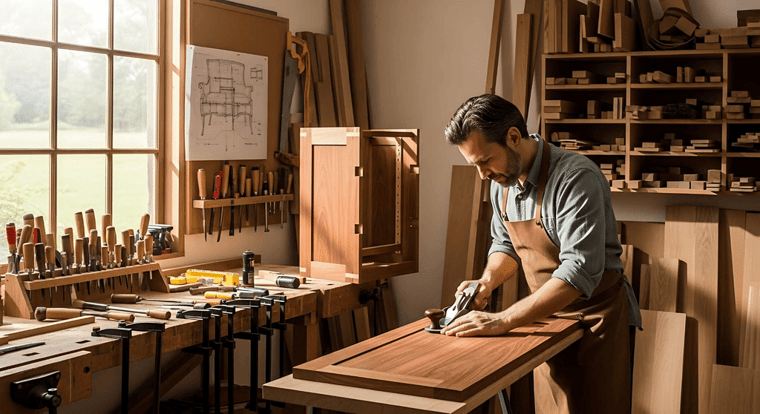
Many make-versus-buy conversations focus only on material costs. In reality, material costs are often the smallest part of the equation. When evaluating whether a component should be produced internally, consider the full cost of production:
- Labor costs — Skilled labor remains one of the biggest challenges facing cabinet shops. Ask how many labor hours a component requires, who is performing the work, and whether that labor could be used more profitably elsewhere. A shop owner spending hours building cabinet doors may be taking time away from sales, project management, installation, or other higher-value activities.
- Equipment costs — Producing components in-house requires more than raw materials. CNC equipment, shapers and tooling, wide belt sanders, spray equipment, dust collection systems, maintenance, and repairs all contribute to the true cost of production.
- Capacity constraints — Many shops become fully booked before they become truly efficient. A production schedule packed with repetitive manufacturing tasks can make it difficult to take on additional work. In these situations, outsourcing can increase capacity without increasing headcount or facility size.
Cabinet Components That Often Make Sense to Build In-House
Not every component should be outsourced. Many shops continue to gain value from keeping certain operations internal, particularly those that directly affect project execution and customer relationships.
Cabinet Boxes and Carcasses
Cabinet boxes are often a logical in-house product because they are closely tied to each project's specific requirements. Shops can maintain their preferred construction methods, adapt quickly to design changes, and control production schedules without relying on outside vendors. For many cabinetmakers, cabinet box construction remains a core part of their value proposition.
Design, Engineering, and Project Management
Design, estimating, shop drawings, and project management are typically best kept in-house because they directly affect client relationships, project profitability, and overall project execution. These functions rely heavily on customer communication, local knowledge, and an understanding of each project's unique requirements.
Installation
Installation remains one of the highest-value activities for many cabinet shops. Field adjustments, coordination with other trades, and direct client communication are difficult to outsource effectively.
Components That Often Make Sense to Outsource
Certain cabinet components require specialized equipment, labor, and production systems that can be difficult for smaller shops to justify. These components are often strong candidates for outsourcing because they consume significant shop resources without always contributing directly to project management, installation, or customer service.
Cabinet Doors
Cabinet doors are one of the most commonly outsourced components. Producing consistent cabinet doors requires specialized tooling, precision machining, sanding operations, finishing capabilities, and quality control systems.
Even cabinet shops that can afford the necessary equipment to manufacture cabinet doors at scale often don’t have enough projects to fully utilize that equipment, making outsourcing a natural decision. In addition, most cabinetmakers find that outsourcing cabinet doors improves consistency while freeing up production capacity. These benefits become even more significant as production volume increases.
Dovetail Drawers
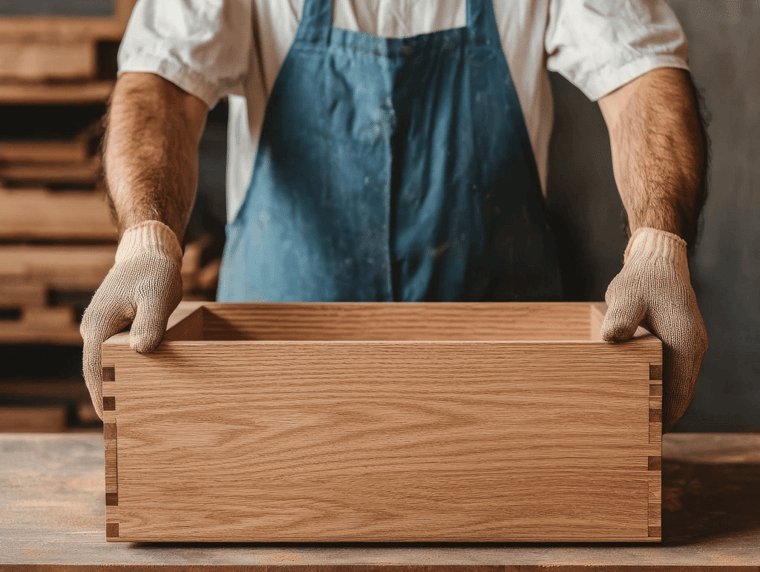
Dovetail drawers are another component frequently outsourced. While many shops are capable of building drawer boxes internally, producing them efficiently and consistently is a different challenge.
Outsourcing dovetail drawers can help reduce production labor, increase throughput, improve consistency, and simplify scheduling. The result is more time available for higher-value work.
Finishing Operations
Finishing can create significant production bottlenecks because it requires spray equipment, environmental controls, dedicated workspace, and skilled labor. Depending on shop size and production volume, outsourcing finishing may improve efficiency while reducing overhead.
Some shops also reduce finishing workload by purchasing pre-primed cabinet doors, which eliminates several preparation steps while helping maintain a consistent surface for paint applications.
Specialty Components
Certain components simply do not justify dedicated equipment investments. Specialty moldings, turned components, decorative millwork, and custom profiles are often produced more efficiently by suppliers that focus exclusively on those product categories.
Quick Reference: What Cabinet Shops Typically Build vs Outsource
While every cabinet shop allocates resources differently, certain components are more commonly built in-house, while others are frequently outsourced to improve efficiency, consistency, and capacity. Use this table as a general guide when evaluating where your shop can create the most value.
|
Component |
Often Built In-House |
Often Outsourced |
|
Cabinet Boxes |
✓ |
|
|
Design & Engineering |
✓ |
|
|
Installation |
✓ |
|
|
Cabinet Doors |
✓ |
|
|
Dovetail Drawers |
✓ |
|
|
Finishing |
Depends |
Depends |
|
Specialty Components |
✓ |
How to Evaluate Whether a Component Should Be Outsourced
Every shop is different. What makes sense for one operation may not make sense for another. Rather than relying on tradition or assumptions, evaluate components using a consistent framework:
- Labor requirements — How many labor hours does the component require, and could that labor be used more profitably elsewhere?
- Equipment investment — Consider the equipment, tooling, maintenance, and replacement costs required to produce the component consistently.
- Production volume — A high-volume of projects with identical components may justify in-house manufacturing, while lower-volume custom work is often more economical to outsource.
- Quality consistency — If quality varies depending on staffing, workload, or production schedules, outsourcing may improve reliability and repeatability.
- Lead time impact — Many shop owners assume outsourcing slows production. In reality, outsourcing often shortens project timelines by eliminating internal bottlenecks. The key question is whether a supplier can produce the component faster and more consistently than your shop can.
No single factor should determine the decision. The most successful shops evaluate labor, equipment, capacity, quality, and lead times together when deciding whether to build or buy a component.

The Hybrid Production Model Used by Many Successful Shops
Most growing cabinet shops don't operate at either extreme. Rather than producing every component internally or outsourcing everything, many adopt a hybrid production model that combines in-house production with strategically outsourced components.
A common workflow might include:
- Design projects internally
- Build cabinet boxes internally
- Outsource cabinet doors
- Outsource dovetail drawers
- Assemble and install internally
This approach allows shops to focus on the activities that create the most value while reducing time spent on repetitive manufacturing processes.
Hybrid production models often require less equipment investment, less production labor, and fewer manufacturing bottlenecks while providing greater scheduling flexibility. As demand increases, shops can often scale faster without expanding facilities or adding significant overhead. The end result is more projects and higher revenue with the same resources as before.
Perhaps most importantly, a hybrid model allows owners and employees to spend more time on high-value activities such as sales, design, project management, installation, and customer relationships. For many shops, these functions generate greater long-term value than manufacturing every component internally.
Signs You're Ready to Outsource More Production
Many cabinet shop owners don't start considering outsourcing until growth begins creating operational challenges. What worked when the shop was smaller can become much harder to sustain as project volume increases.
You may be ready to outsource more production if:
- Lead times continue to increase despite a full production schedule.
- Production hold-ups and scheduling conflicts happen regularly.
- You're struggling to hire or retain the skilled labor needed to keep up with demand.
- Quality becomes inconsistent as workload increases.
- Projects are being delayed because production capacity is maxed out.
- You're turning away profitable work because the shop doesn't have enough bandwidth.
- Owners, project managers, or installers are spending time on repetitive manufacturing tasks instead of higher-value work.
If several of these challenges sound familiar, the issue may not be a lack of work—it may be that internal production capacity has become a constraint. Strategic outsourcing can help create the capacity needed to take on additional projects without significantly increasing labor, equipment, or overhead.
Common Outsourcing Mistakes to Avoid
Outsourcing can improve efficiency, capacity, and consistency, but only when implemented correctly.
One of the biggest mistakes is choosing suppliers based solely on price. A low-cost supplier that creates delays, quality issues, inconsistent sizing, or communication problems can quickly become more expensive than a higher-priced supplier that delivers reliable results.
Another common mistake is failing to standardize specifications. Consistent ordering procedures, approved product standards, and clear documentation help ensure outsourced components arrive as expected and integrate smoothly into production and installation.
Many shops also underestimate the importance of supplier relationships. Reliable suppliers become an extension of your production process, making communication, consistency, and dependability just as important as price.
Finally, outsourcing should be viewed as a long-term production strategy rather than a temporary solution. The most successful shops build repeatable systems and strong supplier partnerships that support growth over time.
Building a Scalable Production Strategy
Every cabinet shop eventually reaches a point where growth depends on improving systems rather than adding more effort. The make-or-buy decision really comes down to determining where your shop can create the most value.
For many growing cabinet shops, that means keeping design, project management, cabinet box construction, and installation in-house while outsourcing components that require specialized equipment or consume significant labor. A well-executed hybrid production model can increase capacity, improve consistency, and support profitable growth without significantly increasing overhead.
If you're evaluating which components to outsource, Eagle Woodworking can help. We provide custom cabinet doors, dovetail drawers, and other cabinet components built to your specifications, helping cabinet shops increase production capacity while maintaining consistent quality and dependable lead times.