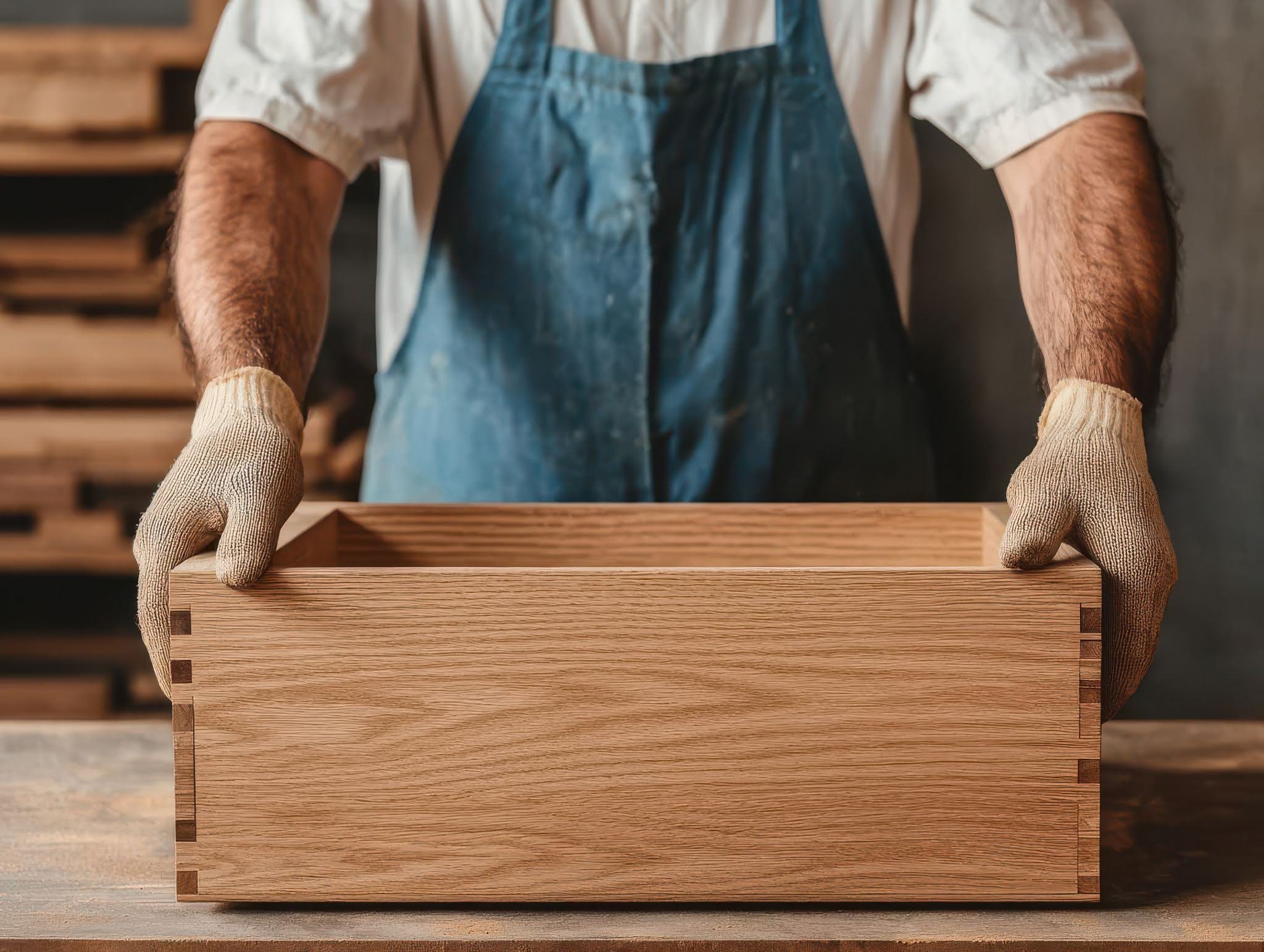
Drawer boxes are one of the hardest-working components in any cabinet system. Long after cabinet doors, finishes, and hardware have been installed, drawers continue to handle daily wear from opening, closing, and supporting everything from utensils to heavy cookware.
For cabinet shops, choosing the right drawer box construction affects more than durability. It influences project costs, installation efficiency, customer satisfaction, and the overall perception of quality.
This guide explains how to evaluate drawer box construction based on three key factors: durability, cost, and customer fit.
In this article:
- The Three Factors That Should Drive Your Drawer Box Decision
- Common Drawer Box Construction Methods
- Drawer Box Construction Comparison Chart
- Choosing Based on Durability
- Choosing Based on Cost
- Choosing Based on Customer Expectations
- Eagle Insight
- Why Many Cabinet Shops Choose Dovetail Drawers
- Frequently Asked Questions
The Three Factors That Should Drive Your Drawer Box Decision
When evaluating drawer box construction, most cabinet shops focus on three questions:- How durable does the drawer need to be?
- What budget does the project allow?
- What level of quality does the customer expect?
Answering these questions first will usually point you toward the most appropriate drawer box construction method. From stapled and rabbet and dado construction to lock joint and dovetail joinery, each option offers a different balance of durability, cost, and customer value.
Common Drawer Box Construction Methods
Before choosing a drawer box construction method, it's helpful to understand the most common types used in cabinet manufacturing. Each offers a different balance of strength, production efficiency, appearance, and cost.
It also helps to know that "construction method" really combines two things: the joint that connects the drawer sides (butt, dado, rabbet and dado, lock joint, or dovetail) and the fastener that holds it (glue, staples, brad nails, screws, or pocket screws). Stronger joints generally rely less on the fastener to carry the load, which is a big part of why dovetail construction performs so well over time.
Stapled (Butt Joint) Drawer Boxes
Stapled construction is one of the fastest and most economical methods for assembling drawer boxes. The drawer sides are joined with a simple butt joint — squared ends fastened together, often with glue for additional strength. While staples are the most common fastener, brad nails or screws are sometimes used in the same butt-joint construction. It is commonly used in builder-grade and budget-conscious cabinetry where production speed and cost are the primary priorities. While cost-effective, it generally offers the least mechanical strength, because the joint relies heavily on the fastener rather than the geometry of the joint itself.
Rabbet and Dado Drawer Boxes
Rabbet and dado construction uses machined grooves and shoulders to mechanically locate and reinforce the drawer components before they are glued and fastened together. A simpler variation, sometimes called a dado or dado-insert joint, seats the end of one board into a groove machined in the other; a true rabbet and dado adds a rabbeted tongue for more glue surface and better alignment. Compared with stapled construction, both provide better registration and a stronger joint, making this a common choice for mid-range cabinetry.
Lock Joint Drawer Boxes
Lock joint, or drawer lock, construction uses interlocking machined joints that create more glue surface and mechanical strength than basic butt or rabbet joints. It offers an excellent balance of durability and manufacturing efficiency, making it a popular option for semi-custom and production cabinetry.
Dovetail Drawer Boxes
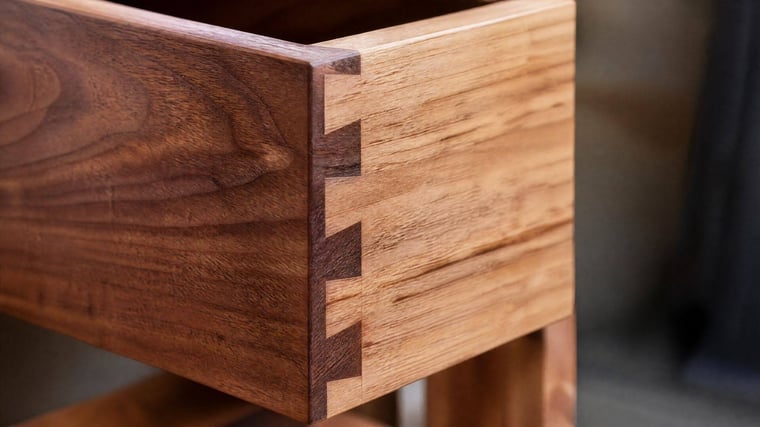
Dovetail joinery uses interlocking “pins” and “tails” to create one of the strongest mechanical joints available for drawer box construction. The interlocking joint provides exceptional resistance to pulling forces while showcasing visible craftsmanship, making dovetail construction the preferred choice for many custom cabinet shops.

Drawer Box Construction Comparison Chart
Compare the most common drawer box construction methods based on durability, cost, and typical applications.
|
Construction Method |
Durability |
Cost |
Visible Craftsmanship |
Typical Application |
|
Stapled (butt joint) |
Good |
$ |
Low |
Builder-grade cabinetry |
|
Rabbet and dado (incl. dado-insert) |
Better |
$$ |
Low |
Production cabinetry |
|
Lock joint |
Very Good |
$$$ |
Moderate |
Semi-custom cabinetry |
|
Dovetail |
Excellent |
$$$$ |
Excellent |
Custom cabinetry |
Choosing Based on Durability
Drawer box durability is often the primary consideration, particularly for kitchens, bathrooms, pantries, mudrooms, and other high-use environments.
While all drawer box construction methods are designed for everyday use, they differ in how well they withstand repeated opening, closing, and heavy loads over time. Stapled drawer boxes are generally best suited for lighter-duty applications, while rabbet and dado construction, followed by lock joint construction, provide progressively greater joint strength.
Dovetail drawer boxes are widely regarded as one of the most durable construction methods available. The interlocking pins and tails create a mechanical connection that helps resist drawers pulling apart under repeated use. Eagle Woodworking builds every one of our drawer boxes using half-blind (English) dovetail joinery, CNC-cut components, hand assembly, and hand sanding.
Consider the Application
The intended application also plays an important role when selecting a construction method. Not every drawer performs the same job. A shallow utensil drawer has different performance requirements than a deep file drawer or kitchen cabinet organizers like trash pull-outs. For high-use or heavy-load applications, many cabinet shops choose dovetail construction to provide additional long-term durability and help reduce the likelihood of callbacks.
Choosing Based on Cost
The cost of drawer box construction varies depending on the joinery method, materials, and manufacturing process.
Stapled drawer boxes generally offer the lowest upfront cost, followed by rabbet and dado construction, lock joint construction, and finally dovetail joinery. Dovetail drawer boxes typically carry a higher upfront cost due to the additional machining and craftsmanship involved, but many cabinetmakers view the investment as worthwhile because of their improved durability, appearance, and long-term performance.
When evaluating cost, consider more than the initial purchase price. Reduced callbacks, longer service life, and customer satisfaction can often justify investing in a higher-quality construction method.
Choosing Based on Customer Expectations
The right drawer box construction also depends on what the customer expects from the finished project.
Builder-Grade and Budget-Conscious Projects
Stapled and rabbet and dado drawer box construction are commonly used for builder-grade and production cabinetry where affordability, functionality, and manufacturing efficiency are primary priorities.
Semi-Custom Cabinetry
Semi-custom projects typically balance cost, durability, and appearance. Depending on the project's budget and performance requirements, rabbet and dado, lock joint, or dovetail construction may all be appropriate choices.
Custom and High-End Cabinetry
Customers investing in custom cabinetry often place a higher value on craftsmanship, durability, and long-term performance. For these projects, dovetail drawer boxes are frequently preferred and are often considered the standard rather than the upgrade. The exposed dovetail joinery also serves as a visible indicator of craftsmanship, reinforcing the premium quality many customers expect from custom cabinetry.
Expert Eagle Insight
As a drawer box manufacturer, we have conversations every day with cabinet shops about the types of drawer boxes they're installing, what's working, and what's trending. One of the biggest shifts we've seen is the growing adoption of dovetail drawer box construction across every market segment. While quality remains a major driver, it's no longer the only reason.
As undermount drawer slides have become the preferred choice for kitchen cabinetry, the sides of the drawer box are now fully visible when the drawer is opened, allowing the craftsmanship of dovetail joinery to stand out. At the same time, CNC manufacturing has significantly reduced the cost and production time of dovetail drawers, making what was once a niche construction method an increasingly practical choice for everyday kitchen projects.
Why Many Cabinet Shops Choose Dovetail Drawers
For many shops, dovetail drawer boxes have become the preferred choice because they provide a strong balance of durability, craftsmanship, and customer satisfaction. Their long service life, premium appearance, and consistent performance make them a reliable choice for everything from kitchens and bathrooms to mudrooms and built-in storage.
While stapled, rabbet and dado, and lock joint construction each have their place, many cabinet shops choose to standardize on dovetail drawers because one construction method can deliver consistent results across a wide range of applications.
For cabinet shops looking to increase capacity without adding production bottlenecks, outsourcing dovetail drawer box manufacturing with Eagle Woodworking can help maintain consistent quality while keeping projects moving on schedule.
Frequently Asked Questions
What is the strongest drawer box construction method?
Dovetail joinery is widely considered one of the strongest drawer box construction methods because the interlocking pins and tails create a mechanical connection that resists pulling apart under heavy use.
Are dovetail drawers stronger than lock joint drawers?
Both construction methods create strong mechanical joints, but dovetail joinery has long been considered the benchmark for high-quality drawer construction because of its durability and visible craftsmanship. Lock joint construction offers an excellent balance of strength and manufacturing efficiency, while dovetail joinery is often preferred for premium custom cabinetry. The best choice depends on the project's budget, production requirements, and quality expectations.
What is the difference between stapled, rabbet and dado, lock joint, and dovetail drawer boxes?
Stapled drawer boxes prioritize affordability and production speed. Rabbet and dado construction provides greater strength and alignment through machined joints, while lock joint construction adds additional mechanical strength and glue surface. Dovetail joinery offers the highest level of durability and visible craftsmanship, making it a common choice for custom cabinetry.
Are dovetail drawer boxes worth the extra cost?
For many custom cabinetry projects, yes. Dovetail drawer boxes provide exceptional durability, long service life, and a high-end aesthetic that many customers associate with quality craftsmanship.
What materials are best for drawer boxes?
Hardwood drawer boxes are commonly preferred for custom cabinetry because they offer durability and a high-quality appearance. Maple is one of the most commonly used species due to its strength, availability, and consistent performance. Eagle Woodworking stocks soft maple, white oak, and walnut drawer boxes, with additional species available upon request.
What drawer box construction is best for custom cabinets?
Hardwood dovetail drawer boxes are commonly considered the premium choice for custom cabinetry because they combine strength, durability, and visual appeal.
Do drawer slides matter as much as drawer box construction?
Both are important. A high-quality drawer box performs best when paired with appropriate hardware. To learn more, read our guide on the different types of drawer slides.
Are pocket hole drawer boxes a good option?
Pocket-hole construction uses angled screws driven through a recessed pocket to join drawer components. It's a fast, accessible method popular in face-frame and DIY work, but it's less common in production drawer boxes, where the joint is still typically a plain butt joint. The angled screw head is recessed but leaves a visible oblong hole unless it's plugged. For high-use cabinetry, most cabinet shops favor stronger machined joints such as lock joint or dovetail construction.